
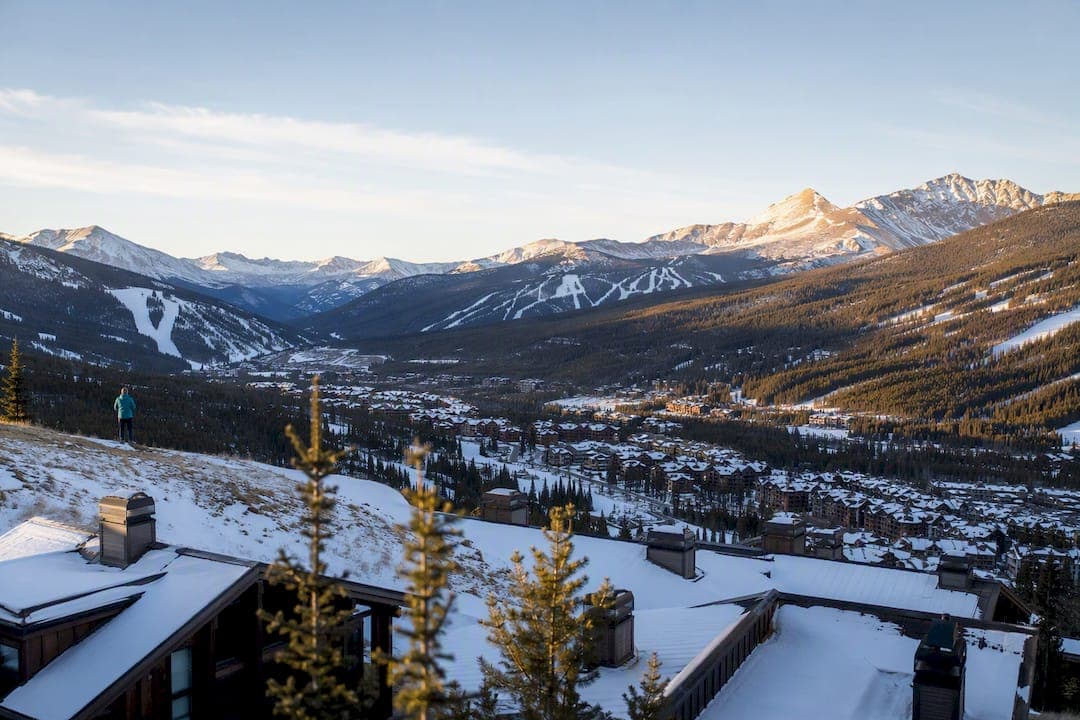
For hands-on short-term rental operators who want maximum calendar control and town-center energy, Breckenridge usually wins. For buyers who want a lower entry price and prefer someone else handling the rental logistics, Keystone typically fits better. The exceptions matter: STR permit caps in specific Breckenridge zones, Keystone's rental-pool restrictions, and new-development pricing distortions can flip that recommendation depending on the parcel. That is exactly the kind of detail worth checking before you write an offer, and it is the first question I ask every client at Jayden Vermeer Realtor.
TL;DR:
- Keystone's recent median condo prices are inflated by new luxury developments, while older resale units in both towns show little actual price growth.
- HOA fees in Breckenridge vary widely based on building age and amenities, whereas Keystone's more uniform fees often include management of rental pools, simplifying operational costs.
- Confirm building warrantability early for both towns, as Keystone's rental-pool buildings tend to have a higher risk of non-warrantability.
- Buyers seeking control over rental management prefer Breckenridge's independent short-term rentals, while Keystone's managed pools offer operational ease at the expense of pricing flexibility.
- Parcel-level verification, including STR permit caps and HOA restrictions, is essential to avoid costly surprises and ensure the property fits your rental and financing plans.
Table of Contents
- Housing Types: Condos, Townhomes, and Ski-Access Units
- Current Entry Prices: What the Headlines Don't Tell You
- HOA Fees and Carrying Costs: Where the Gap Shows Up
- Financing and Warrantability: The Difference That Trips Up Buyers
- Rental Yield: Managed Pool vs Independent Short-Term Rental
- Lifestyle and Access: Which Town Feels Like Home?
- Due Diligence Checklist Before You Write an Offer
- Comparing the Skiing Itself: Terrain and On-Mountain Amenities
- Seasonal Events and Local Activities
- Getting Between the Two Towns and Beyond
- What History Suggests About Long-Term Appreciation
- Schools and Family Resources
- A Local Perspective on Choosing Between Breckenridge and Keystone
- Ready to Compare Specific Listings in Breckenridge or Keystone?
- Where to Verify These Details Yourself
- Sources
Housing Types: Condos, Townhomes, and Ski-Access Units
Breckenridge offers the wider mix. You will find Victorian-era single-family homes near Main Street, modern townhomes in neighborhoods like Wellington or Highlands, and condo buildings ranging from modest 1970s stock to ski-in/ski-out towers at the base of Peak 8 and Peak 9. That range gives buyers more entry points, but it also means more variation in construction quality and HOA structure from one building to the next.
Keystone leans heavily condo and townhome, with far fewer standalone single-family listings. Most inventory clusters around River Run Village, Lakeside Village, and the Mountain House base area, plus townhome pockets in Soda Ridge and Tenderfoot. Ski-access units are common here too, though the buildings tend to be newer and more uniform since much of Keystone's base development happened later than Breckenridge's historic core.
If you want a freestanding house with land, Breckenridge is realistically your only option between the two. If you want a lock-and-leave condo you can walk to lifts from, both towns deliver, but Keystone's inventory skews slightly newer and more standardized. That consistency can simplify due diligence, since fewer decades-old mechanical systems and idiosyncratic HOA bylaws are in play.
Current Entry Prices: What the Headlines Don't Tell You
Entry prices in both towns have moved in 2026, but the headline numbers deserve a skeptical read. A recent market update comparing Keystone and Breckenridge condos found that new luxury development, specifically the Kindred Residences project, has pushed Keystone's median condo price up in a way that doesn't reflect what a typical resale buyer will pay. Breckenridge's resale market, by contrast, shows a more stable, plateauing median because its inventory mix hasn't been recently reshaped by a single large new project.
This matters because a buyer scanning aggregate medians could easily conclude Keystone got dramatically more expensive when, in reality, older resale units may have moved very little. Separate market commentary on Summit County's town-by-town breakdown makes the same point: a single luxury closing or a thin sales month can swing a town's median without reflecting the broader trend.
The practical fix is simple. Ask for resale-only comparables, filtered to exclude new construction, before you anchor on any published median. A property that looks aggressively priced against the headline number might be priced right in line with genuine resale history, and vice versa.
HOA Fees and Carrying Costs: Where the Gap Shows Up
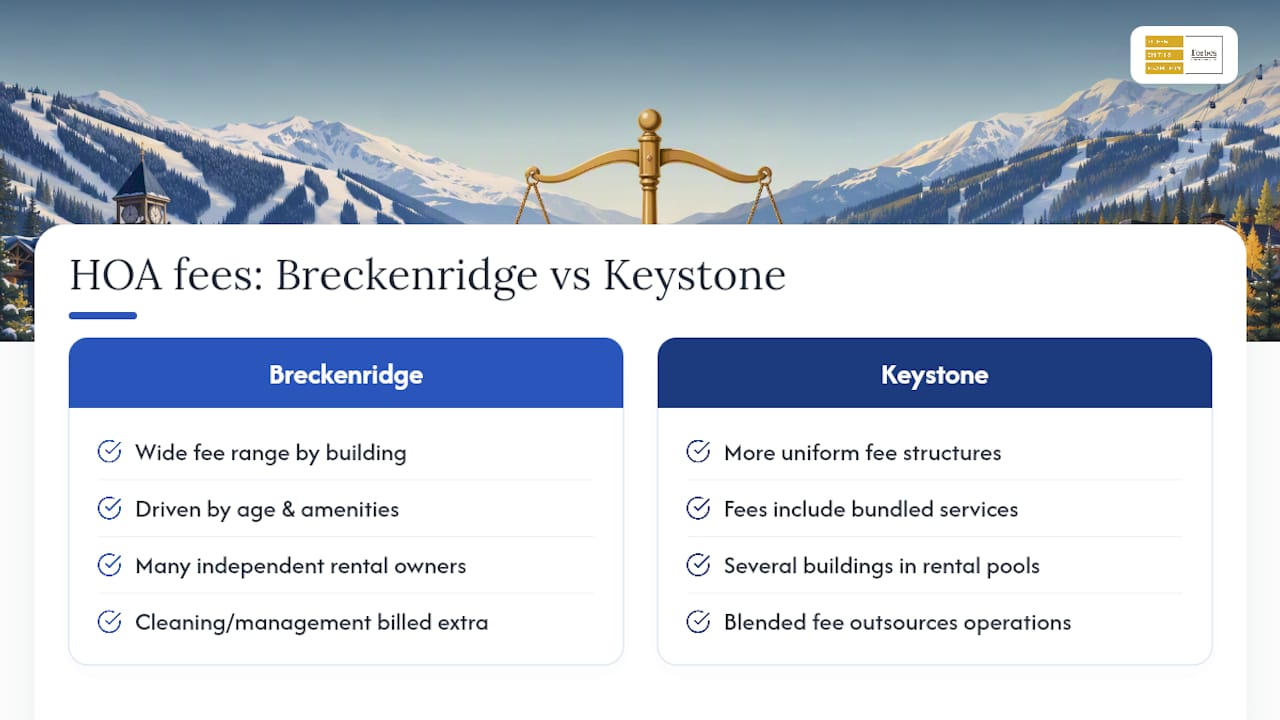
Carrying costs diverge between the two towns mostly because of building age, amenity load, and rental-pool structure. Breckenridge HOA fees vary widely, from modest monthly dues on older, amenity-light condo buildings to steep fees on ski-in/ski-out towers with pools, hot tubs, underground parking, and full-time front desk staff. Because Breckenridge's stock spans decades of construction, you genuinely have to check building by building.
Keystone's HOA structures tend to run more uniform, partly because more of its base-area inventory was built or renovated under a smaller number of management companies and partly because several buildings are tied into managed rental pools that bundle housekeeping, reservations, and maintenance into the monthly fee. That bundling can make the number look higher on paper, but it also means fewer surprise assessments if the HOA runs the amenities well.
Neither town is categorically cheaper to carry. What matters is matching the fee structure to your intended use. A buyer planning independent short-term rentals in Breckenridge needs to budget separately for cleaning and management on top of HOA dues. A buyer entering a Keystone rental-pool building may pay a higher blended fee but outsource nearly everything operational. Always request the last two years of HOA financials and any reserve study before assuming a fee is stable.
Financing and Warrantability: The Difference That Trips Up Buyers
Warrantability is the financing detail most buyers overlook until it derails a closing. Condo buildings that fail Fannie Mae or Freddie Mac warrantability tests, often because too high a percentage of units are non-owner-occupied, in active litigation, or enrolled in a mandatory rental program, force buyers into non-warrantable condo loans.
Breckenridge's older, more owner-occupied buildings are more likely to be warrantable, though ski-in/ski-out towers with heavy rental concentration can fail the test just as easily as anywhere else. Keystone's rental-pool-heavy buildings run a higher structural risk of non-warrantable status precisely because so many units in a single building are enrolled in the same managed program. That doesn't make Keystone unfinanceable. It means you should confirm warrantability status before you fall in love with a unit, since it directly changes how much cash you need at closing and which lenders will even quote the loan.
Cash buyers and those comfortable with portfolio lending have more flexibility in either town. If you are financing conventionally and need to keep your down payment near 10 to 20%, ask your agent to pull the building's warrantability status before you write an offer, not after your lender flags it during underwriting.
Rental Yield: Managed Pool vs Independent Short-Term Rental
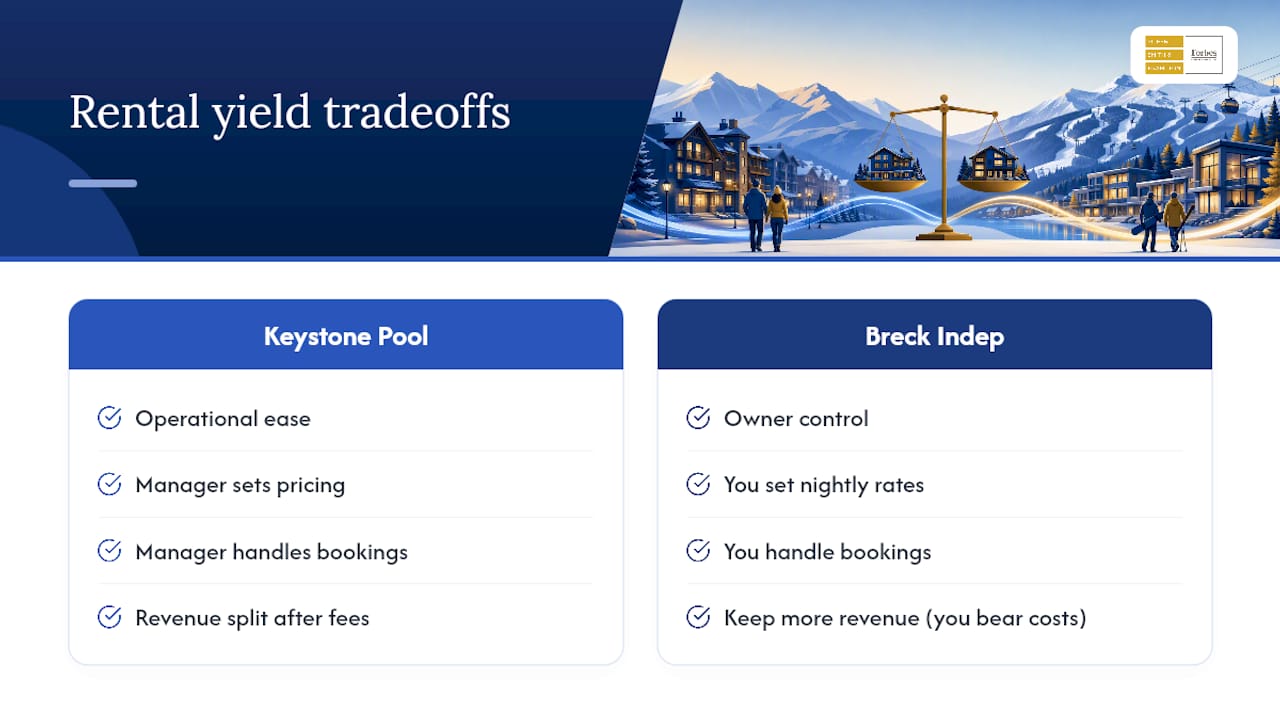
The core tradeoff here is control versus simplicity. Local market commentary comparing STR yield gaps between the two towns describes Keystone as attracting buyers who accept managed rental-pool returns in exchange for operational ease, while Breckenridge draws independent operators chasing higher upside who are willing to handle more permit and operational complexity themselves.
A managed rental pool in Keystone means the property management company sets pricing, handles bookings, and distributes revenue on a schedule, usually after taking a cut that covers marketing, housekeeping coordination, and front-desk service. You give up pricing control and blackout-date flexibility over your own unit, but you also give up the work.
An independently operated Breckenridge short-term rental, by contrast, lets you set your own nightly rate, block dates for personal use whenever you want, and choose your own cleaning and management vendors. That flexibility is real upside during peak weeks, but it also means you are the one securing a license, meeting occupancy limits, and answering to the county if something goes wrong. One conservative way to model either path is to treat your HOA dues as a fixed annual cost, assume management fees at the high end of the published range, and stress-test your occupancy assumptions against a worse-than-expected season before you commit.
Lifestyle and Access: Which Town Feels Like Home?
Breckenridge functions as a real town, not just a resort base. Main Street runs for blocks with restaurants, grocery stores, a hardware store, medical clinics, and year-round residents who aren't there just for ski season. That means better walkability, more errands you can knock out without driving, and a livelier social scene, especially in winter when the town fills with visitors.
Keystone is quieter and more contained. River Run Village covers dining and basic shopping, but for a full grocery run or a wider range of services, you are driving into Silverthorne or Dillon, roughly 15 to 20 minutes down US 6. Families often describe Keystone as calmer and easier to navigate with young kids, since the base village is compact and traffic-light compared to Breckenridge's Main Street congestion during peak weekends.
Commute matters too if you plan to live here full-time rather than just vacation. Breckenridge sits closer to Frisco and has more direct access points, while Keystone's location up Highway 6 adds a few extra minutes to reach I-70 westbound. Neither difference is dramatic, but if you are weighing a full-time move against a second home, those minutes add up over a Colorado winter.
Due Diligence Checklist Before You Write an Offer
A handful of questions separate buyers who close smoothly from buyers who discover problems at underwriting or, worse, after closing.
- Confirm the parcel's overlay zone status and current STR license availability directly with Summit County before assuming rental income is possible.
- Request two years of HOA financials, the current reserve study, and any pending special assessments.
- Ask whether the unit is enrolled in a mandatory rental pool, and if so, get the exit clause terms in writing.
- Verify the building's warrantability status with a lender early, not during underwriting.
- Ask the listing agent whether recent comparable sales included new-construction units that could distort the price-per-square-foot comparison.
That last point echoes the resale-versus-new-construction caution from the May 2026 Keystone and Breckenridge market update. Sellers and listing agents don't always volunteer whether a unit is locked into a rental program that restricts your independent listing rights, so ask directly and get the answer in writing before you go under contract.
Comparing the Skiing Itself: Terrain and On-Mountain Amenities
Breckenridge spans five peaks with terrain that ranges from beginner-friendly greens near the base to genuinely demanding bowls and glades higher up, plus a well-known terrain park scene that draws freestyle skiers and snowboarders from across the state. The mountain also runs later into spring most years, which matters if you are weighing rental demand into April.
Keystone's terrain is more compact but includes night skiing, a rarity in Colorado, along with dedicated beginner zones that make it a common choice for first-timers and families easing into the sport. The mountain's back bowls offer solid intermediate and advanced options without Breckenridge's crowd density on a powder day.
Neither mountain is objectively better. They serve different skiers, and that difference shapes rental demand: Breckenridge draws a broader, younger, more terrain-park-focused crowd, while Keystone tends to pull families and beginner groups who value the night skiing and gentler learning curve. If you are buying with short-term rental income in mind, matching your unit's marketing to the guest profile each mountain actually attracts matters more than which resort has more vertical feet.
Seasonal Events and Local Activities
Breckenridge runs a heavier events calendar year-round. The town hosts the International Snow Sculpture Championships each January, a lively Mardi Gras-style Ullr Fest celebrating Norse winter mythology, and a busy summer schedule of concerts and festivals once the snow melts. That density of programming supports a longer rental season, since visitors come for events beyond just ski days.
Keystone's calendar is lighter but still meaningful, centered on its lake activities in summer, holiday-season events in River Run Village, and its night-skiing program, which effectively extends its daily rental appeal into evening hours that Breckenridge doesn't offer on the same scale.
If your investment thesis depends partly on shoulder-season and summer bookings, Breckenridge's event density gives you more to market against. If your thesis leans on winter night-life-adjacent but family-calm demand, Keystone's quieter, more predictable calendar can still perform well without the marketing lift a packed events schedule requires.
Getting Between the Two Towns and Beyond
Breckenridge and Keystone sit roughly 20 to 25 minutes apart via Highway 9 and US 6, a drive most locals make routinely for errands, dining variety, or simply a change of scenery. Neither town has robust public transit connecting them directly, though Summit Stage, the free county bus system, runs routes within and around each town and connects to Frisco and Silverthorne.
Access to Denver International Airport differs slightly. Breckenridge sits closer to I-70's direct corridor, while Keystone requires a short additional drive up Highway 6 to reach the interstate. During heavy snow events, that added stretch can matter, since Highway 6 is more exposed to closures than the main interstate corridor Breckenridge accesses more directly.
For buyers thinking about renter convenience, proximity to I-70 access points affects arrival experience more than most people expect. A renter comparing two otherwise similar listings will often favor the one with a simpler drive from the airport, especially during a snowstorm.
What History Suggests About Long-Term Appreciation
Both towns have appreciated substantially over the past decade, driven by Summit County's fixed land supply, sustained demand for Colorado mountain property, and the broader shift toward remote-friendly second homes. Neither market behaves like a typical suburban housing market where new subdivisions can absorb demand; geography limits how much new inventory either town can add.
Breckenridge's historic core and broader housing mix has generally supported steadier, longer-running appreciation, in part because its housing stock includes options a wider range of buyers and renters can absorb. Keystone's appreciation has been more recently influenced by new development activity, which can accelerate headline pricing in the short term but also means its recent numbers include projects like Kindred Residences that don't represent organic resale appreciation.
Neither pattern guarantees future performance, and Summit County real estate remains sensitive to broader mortgage rate cycles and second-home demand shifts. What the data does support is treating new-construction-driven price jumps in Keystone with appropriate skepticism, and evaluating Breckenridge's steadier resale trend as the more representative baseline for either town's true year-over-year movement.
Schools and Family Resources
Both towns fall under Summit School District, so families moving full-time won't face a different school system based purely on which town they choose. The practical difference is proximity and commute, not curriculum or district quality.
Breckenridge sits closer to several district schools and to Breckenridge Elementary specifically, giving full-time resident families a shorter daily drive. Keystone families typically drive toward Silverthorne or Dillon for elementary and secondary schools, adding those same 15 to 20 minutes that show up in the broader commute comparison.
For second-home buyers, this distinction rarely matters. For anyone converting a Summit County purchase into a full-time family residence, though, it is worth mapping your actual drive time to the specific school your kids would attend, not just the district boundary line, before finalizing which town makes sense.
A Local Perspective on Choosing Between Breckenridge and Keystone
Most of the buyers I work with already have a lifestyle preference before they have a spreadsheet. That instinct is usually right, but it needs a reality check against the parcel-level facts: STR permit availability, HOA rental-pool restrictions, and warrantability status. I have watched clients fall for a Breckenridge condo assuming they could run it independently, only to discover the building's overlay zone had a capped, waitlisted license pool. I have also seen Keystone buyers assume a lower entry price meant a simpler purchase, without realizing the unit was locked into a rental-pool contract with a restrictive exit clause.
The mistake I see most often isn't picking the wrong town. It's skipping the verification step that would have told them which town actually fit their plan.
— Jayden Vermeer: Summit County Realtor
Ready to Compare Specific Listings in Breckenridge or Keystone?
Reading about permit caps and HOA structures only gets you so far. What actually protects your offer is a parcel-by-parcel check before you sign anything, and expert agents can help buyers weigh these details for Breckenridge against Keystone.
Working with Jayden Vermeer Realtor means getting a parcel-level STR eligibility check before you write an offer, a full HOA and rental-pool review so you know exactly what you're inheriting, a tailored property search that filters out buildings that don't match your financing or rental plans, and negotiation support once you're ready to move. A free consultation starts with a market snapshot specific to the neighborhoods you're considering and ends with a clear next step, whether that's a shortlist of eligible properties or a straightforward answer on why a particular building won't work for your plan. Reach out through Vacationhomesforsalecolorado to schedule that consult and get a straight answer before you commit to either town.
Where to Verify These Details Yourself
Confirm current STR rules directly through the county's own short-term rental regulations page and check basin-level caps and waitlists on the license application and cap-count page. For pricing context, the Keystone vs. Breckenridge condo market update breaks down resale versus new-construction trends in more depth.