

An HOA reserve study is a 30-year financial plan that pairs a physical inventory of major shared assets with a funding schedule designed to avoid surprise special assessments. It combines a physical analysis (what needs replacing, and when) with a financial analysis (how much money the association needs to save, and how fast). Its core purpose is simple: prevent your board from getting blindsided by a $40,000 roof replacement with no cash to cover it.
If you're a board member reading this right now, here's your immediate to-do list:
- Confirm the date of your most recent reserve study. If it's older than five years, schedule an update.
- Check which funding goal your current study uses. Not choosing one is a decision by default.
- Compare your reserve contribution line item against the study's recommended figure before the next budget cycle.
Key Takeaways
An HOA reserve study protects a community's finances by combining a physical component inventory with a 30-year funding plan that keeps percent funded above the risk threshold your board accepts.
| Point | Details |
|---|---|
| Check study currency | Confirm your reserve study is no older than three to five years per CAI best practice. |
| Know your percent funded | Above 70% is strong, 30% to 70% is fair, below 30% signals real special-assessment risk. |
| Choose a funding goal deliberately | Vote on and document full, threshold, or baseline funding rather than leaving it undecided. |
| Match study level to the situation | Use Level I after major changes, Level II mid-cycle, Level III for routine annual refreshes. |
| Watch lender requirements | Confirm your study is current enough to satisfy Fannie Mae, FHA, or Freddie Mac review during resales. |
Table of Contents
- What a Reserve Study Includes and What Standards Apply
- Should Your Board Order a Level I, II, or III Study?
- Which State Rules and Lender Requirements Affect Your Study?
- What Belongs in the Component Inventory?
- How Does the Funding Plan Actually Work?
- How Often Should You Update the Study, and What Does It Cost?
- How to Choose a Reserve Study Provider
- Turning the Reserve Study Report Into Board Action
- What Happens When Reserves Fall Short?
- A Practitioner's Note on Reading Reserve Study Assumptions
- Why Boards Get Reserve Studies Wrong, Even When They Order One
- Sources
What a Reserve Study Includes and What Standards Apply
A compliant reserve study has two parts, and the Community Associations Institute's Reserve Study Standards spell out what belongs in each:
- Physical analysis: a component inventory listing useful life, remaining useful life, and current replacement cost for every reservable asset.
- Financial analysis: a 30-year cash-flow projection showing starting reserve balance, recommended annual contribution, and percent funded.
- Methodology disclosure: the analyst states whether the study uses the component (segregated) method or the cash-flow (pooling) method, since each produces different early-year numbers.
The National Reserve Study Standards, maintained under CAI's framework, also define three "levels of service" that determine how thorough (and expensive) the study is. Knowing which level you're paying for matters just as much as the numbers themselves.
Should Your Board Order a Level I, II, or III Study?
Not every year requires the same depth of analysis. The three levels balance cost against confidence:
- Level I (full study with site visit): An analyst physically inspects every component. Order this when you've never had a study, when ownership or major systems have changed significantly, or at the start of a new update cycle.
- Level II (update with site visit): A lighter walk-through verifies major changes since the last full study. Good for mid-cycle checkpoints when something notable happened, like a roof replacement.
- Level III (desktop update, no site visit): The analyst adjusts numbers for inflation and time elapsed using the prior report. This works for years between physical visits when nothing significant has changed.
Boards that skip straight to Level III every year risk missing real deterioration a site visit would catch.
Which State Rules and Lender Requirements Affect Your Study?
Update cycles aren't just best practice. Many states write them into law, and lenders enforce their own versions on top.
- California and Washington generally require full studies with a site visit every three years, per state statute and reinforced by Davis-Stirling's reserve funding guidance.
- Maryland and Nevada typically follow a five-year cycle; Utah runs on six years.
- Florida carves out longer intervals for certain structural components following recent legislative changes, so confirm current statute language rather than relying on older guides.
- Fannie Mae, FHA, and Freddie Mac frequently require a current reserve study for project approval, which can stall unit resales or refinancing if your association's study has lapsed.
Keep a dated copy of the current study, board meeting minutes adopting its funding goal, and any lender correspondence in one file. That single folder answers most disclosure requests and financing questions before they become problems.
What Belongs in the Component Inventory?
Not everything the association touches qualifies as a reserve item. CAI standards apply a three-part test: the item must have a predictable remaining life, fall under association (not owner) responsibility, and carry a material replacement cost.
Common reservable components vary by property type:
- Condo and townhome communities: roofing, siding, paving, and shared mechanical systems.
- Amenity-heavy communities: pools, clubhouses, and fitness equipment.
- High-rises: elevators, fire suppression systems, and building envelope work.
Long-life items like structural foundations sometimes get an allowance rather than a full replacement projection, since a full lifecycle may exceed the 30-year window. Smart boards review the inventory line by line at each update and flag anything that seems missing, like a repaved parking lot that isn't listed.
Pro Tip: Walk your property with the component list in hand before your next board meeting. Analysts sometimes miss small-but-costly items like retaining walls or irrigation systems that owners assume are already covered.
How Does the Funding Plan Actually Work?
The 30-year projection models a straightforward chain: starting reserve balance, plus annual contributions and interest earned, minus capital expenses, equals the ending balance for each year. Run that forward three decades and you see exactly when a shortfall would hit.
Percent funded, the ratio of actual reserves to the fully funded balance at a given point in time, is the headline number boards should track:
- A percent funded ratio above strong levels indicates healthy reserves.
- Medium percent funded ratios suggest some attention is warranted.
- Low percent funded ratios indicate increased risk of special assessments.
The CAI standards lay out three funding goal options: full funding (target 100% funded), threshold funding (avoid dropping below a set minimum), and baseline funding (never let the balance go negative). Choosing full funding raises monthly contributions but minimizes special-assessment exposure; baseline funding keeps dues lower but leaves less cushion. CAI frames this choice as building a stable, equitable funding plan rather than simply maximizing cash on hand, so pick the goal that matches your community's actual risk tolerance, not just the lowest sticker price.
How Often Should You Update the Study, and What Does It Cost?
CAI best practice calls for a full Level I study with a site visit every three to five years, with lighter updates in the years between. Budget accordingly:
- Full studies typically run $3,000 to $15,000 or more, scaling with community size and complexity.
- Update studies generally cost significantly less than a full study.
- Desktop (Level III) refreshes are the lowest-cost annual option but still require the underlying full study to stay reasonably current.
Order an out-of-cycle update after a natural disaster, a major unplanned replacement, or any project that changes the scope of what the association maintains. Waiting for the "normal" cycle after a hailstorm takes out half your roofs is how boards end up guessing instead of planning.
How to Choose a Reserve Study Provider
Not all providers deliver the same rigor. Use this checklist when reviewing proposals:
- Deliverables: confirm the proposal includes site-visit documentation, a full 30-year cash-flow projection, multiple funding scenarios, and a disclosure summary you can hand to lenders or prospective buyers.
- Credentials: look for a Reserve Specialist (RS) or Professional Reserve Analyst (PRA) designation, both recognized within CAI's credentialing framework.
- Relevant experience: ask for references from communities similar to yours in size and asset mix. A high-rise elevator system needs different expertise than a townhome roofing portfolio.
Pro Tip: Ask every finalist which funding method (pooling or component) they default to, and request a sample scenario under the other method. The gap between the two can reveal how conservative or aggressive their recommendation really is.
Turning the Reserve Study Report Into Board Action
Once the report lands, four numbers deserve your attention before anything else: current reserve balance, percent funded, the recommended annual contribution, and any year where the projection shows a negative balance.
From there:
- Vote formally on which funding goal (full, threshold, or baseline) the board is adopting, and record it in the minutes.
- Update next year's budget to reflect the recommended contribution, even if it means a dues increase.
- Communicate the "why" to owners early. Framing a dues adjustment around a specific future expense, like an elevator overhaul in year seven, lands better than an unexplained number change.
Pro Tip: Attach the percent-funded trend line to your dues-increase notice. Owners respond better to a visual trajectory than to a paragraph of financial justification.
What Happens When Reserves Fall Short?
Underfunded reserves force one of two outcomes: a special assessment or a loan, both more expensive than steady contributions. Deferred maintenance compounds the problem, and a lapsed or thin reserve study can also stall resale financing under Fannie Mae, FHA, or Freddie Mac review.
Documenting your board's process, meeting minutes, adopted funding goal, and budget votes, creates a paper trail that reduces fiduciary exposure if an owner challenges a decision later. The reserve study itself is what quantifies exactly how a shortfall would play out, dollar by dollar, well before it becomes a crisis.
A Practitioner's Note on Reading Reserve Study Assumptions
Analyst templates don't always reflect your building's actual conditions. A roof rated for 20 years in a mild climate may not hold up the same way in a heavy-snow mountain community, where load and freeze-thaw cycles accelerate wear.
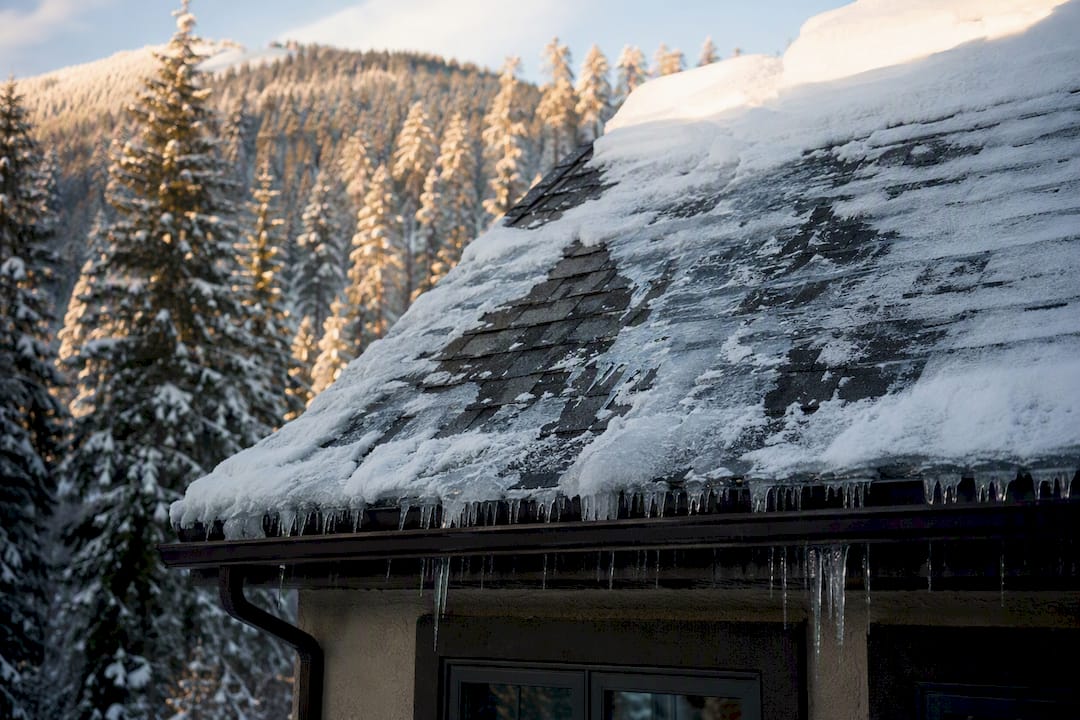
When Summit County boards ask me to review a study, I push them to sanity-check remaining-life estimates against local conditions, not just the report's default assumptions. If you want a second set of eyes on how a property's condition and market value intersect, Vacationhomesforsalecolorado can help.
Why Boards Get Reserve Studies Wrong, Even When They Order One
Most boards treat the reserve study as a compliance document instead of a working plan. That's the real failure, not the study itself. Ordering it on schedule matters less than what happens the week after it arrives: whether the board actually votes on a funding goal and adjusts the budget to match.
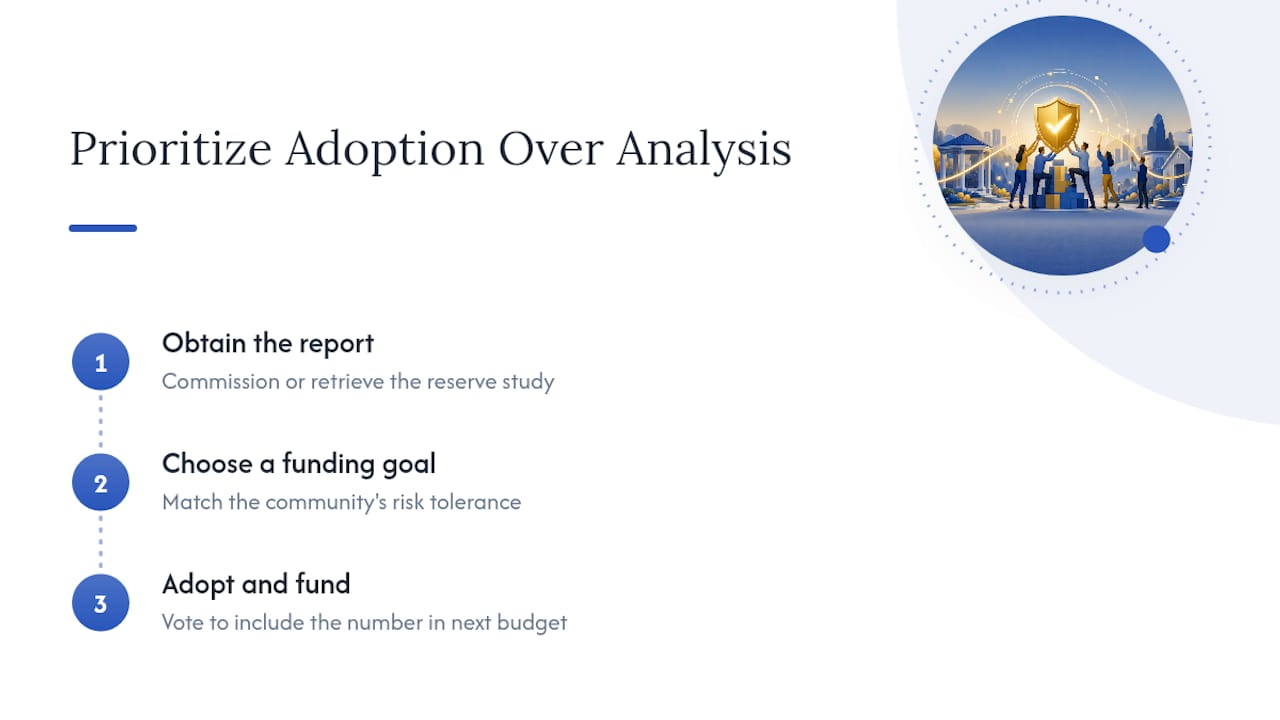
I'd argue the conventional advice overweights the study's mechanics, the projections, the percent-funded math, and underweights the human part. A technically perfect study sitting in a shared drive, unread and unadopted, protects nobody. I've seen the pattern repeat across mountain communities where boards commission a solid Level I study, then quietly keep dues flat because a increase feels unpopular.
If you take one thing from this guide, prioritize the adoption step over the analysis step. Get the report, pick a funding goal that matches your community's actual risk tolerance, and put the number into next year's budget before the next board turnover erases the momentum.
— Jayden