
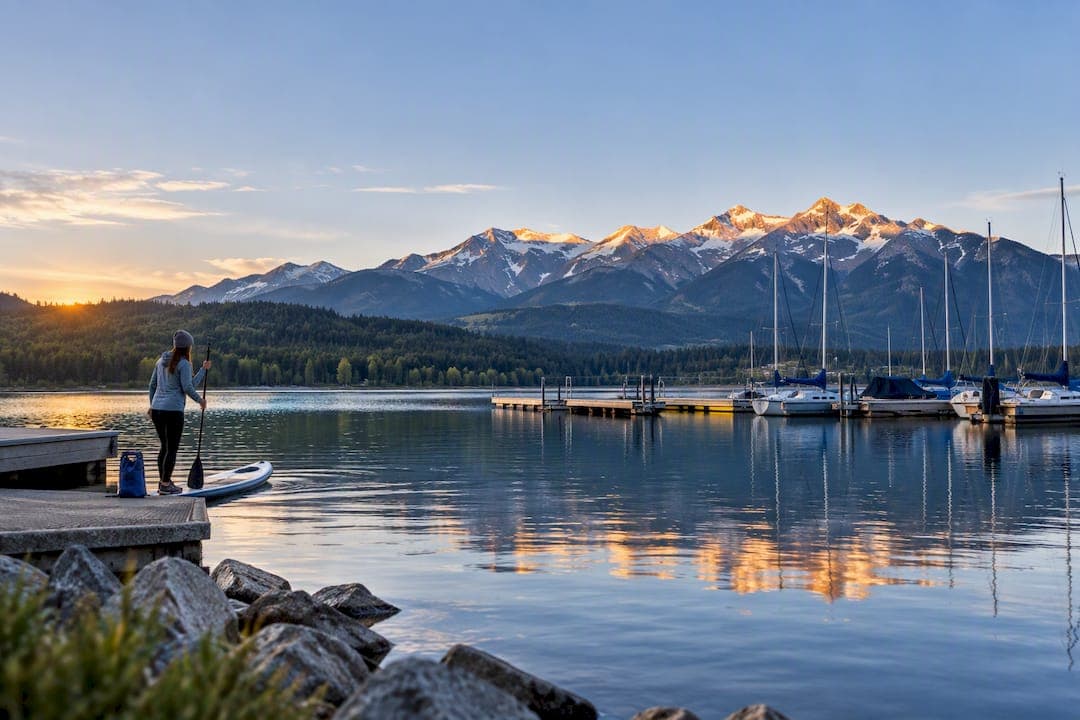
Living in Frisco, Colorado works well for buyers who want lake and ski access without Breckenridge's price tag, for sellers riding steady demand, and for investors willing to navigate a strict short-term rental cap. The single biggest factor shaping any decision here is Frisco's STR license cap, now full of a waitlist, paired with a small, seasonal housing market. A local real estate specialist familiar with Summit County can help you weigh both before you commit.
TL;DR:
- Frisco's short-term rental license cap is fully subscribed with a waitlist that can delay licensing approval by over a year.
- The town’s housing inventory is limited and features mostly condos, townhomes, and second homes, driving quick sales and higher prices.
- Its central location offers easy access to multiple ski resorts and recreational areas, making it attractive for water, ski, and outdoor enthusiasts.
- Buyers should verify STR license eligibility and restrictions with a local specialist before making offers, as licensing can significantly impact rental income potential.
- The cost of living, including groceries and utilities, remains high compared to the Front Range, with transportation costs offset by free public transit options.
Table of Contents
- Quick Facts About Frisco That Affect Home Decisions
- Which Frisco Neighborhoods Fit Your Lifestyle?
- How Do You Buy or Sell a Home in Frisco?
- What Amenities and Services Does Frisco Offer?
- What Does It Cost to Live in Frisco Beyond Housing?
- What's the Job Market Like in Frisco?
- What Is the Community and Social Scene Like?
- What Is Frisco's Climate Like Year Round?
- How Do You Get Around Frisco and Commute?
- What Are the Education Options in and Around Frisco?
- Ready to Buy, Sell, or Invest in Frisco?
- Useful Local Resources
- Sources
- FAQ
Quick Facts About Frisco That Affect Home Decisions
Frisco sits at the junction of Interstate 70 and Highway 9, roughly ten minutes from Copper Mountain and Keystone, and about twenty minutes from Breckenridge. That location, along with its own marina on Lake Dillon, makes it one of the more centrally positioned towns in Summit County for anyone who wants ski access without committing to a single resort.
The town's small size shapes its housing stock. A large share of homes are condos, townhomes, and second homes rather than traditional single-family primary residences, which is typical for a Summit County resort town. Treat any specific percentage you see quoted elsewhere as an estimate rather than a verified figure.
A few things worth knowing before you shop:
- Population swells dramatically in winter and summer, straining parking, dining, and short-term services.
- Inventory is thin most of the year, so well-priced homes move quickly.
- Many buyers are purchasing a second home or investment property rather than a full-time residence.
Which Frisco Neighborhoods Fit Your Lifestyle?
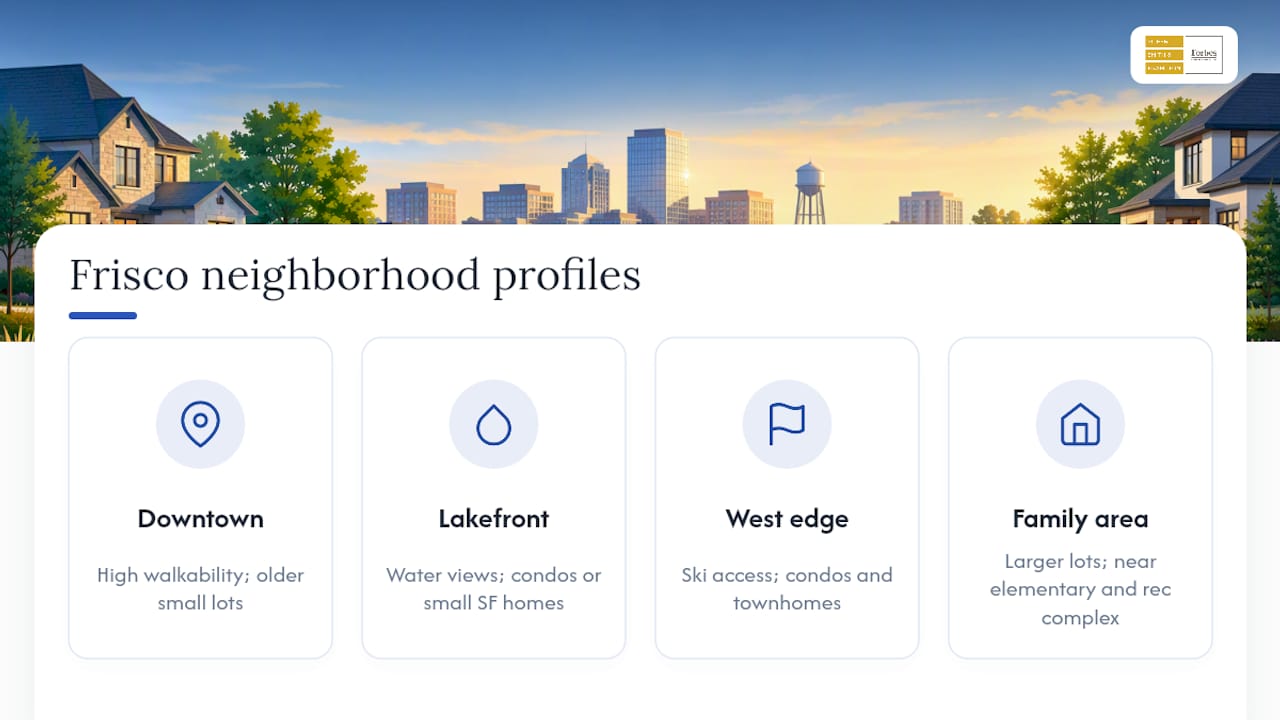
Downtown Frisco, centered on Main Street, suits buyers who want walkability to restaurants, breweries, and the Frisco Historic Park without a car. Homes here tend to be older, smaller lots mixed with newer infill construction, and they carry a premium for that walk score. It's a strong fit for retirees, remote workers, and anyone tired of driving for a coffee.
The lakefront pockets near the Frisco Bay Marina and Peninsula Recreation Area appeal to buyers chasing water views and paddleboard access in summer. These properties, often condos or smaller single-family homes, draw both primary-residence buyers and investors eyeing rental demand tied to the marina's activity.
Neighborhoods closer to the base of Copper Mountain or along the Summit County bike path toward Frisco's western edge suit ski-first buyers who want quick highway access without paying Breckenridge or Keystone base-area prices. Expect a mix of condos and townhomes here, many built in the 1980s and 1990s alongside newer developments.
Families tend to gravitate toward the quieter residential streets north and east of downtown, closer to Frisco Elementary and the town's recreation complex. Lots are generally larger, and the pace is calmer than the tourist corridor along Main Street.
If you're comparing Frisco against nearby options, it's worth browsing Keystone condos and townhomes or Breckenridge condos side by side before narrowing your search.
How Do You Buy or Sell a Home in Frisco?
Buying or selling in Frisco follows Colorado's standard contract and closing framework, but the timeline and details shift with the mountain-town market. Most residential purchases close through a title company, with Colorado-licensed title insurers setting and filing their own rate schedules, so title costs vary by underwriter rather than by a fixed statewide fee.
A typical Frisco purchase moves through these stages:
- Pre-approval and search. Confirm financing first, especially if you're buying a second home or investment property, since lenders often apply different down payment and reserve requirements than for a primary residence.
- Offer and inspection. Inventory is tight enough that competitive offers with short inspection windows are common during peak buying seasons (late spring and early fall).
- Title work and closing. Colorado closings typically run 30 to 45 days from contract to close, though cash and STR-focused investment purchases can move faster.
- HOA and covenant review. Many Frisco condos and townhomes carry HOA rules that restrict rentals independent of town licensing, so this step matters as much as anything the town regulates.
Sellers benefit from pricing strategy tailored to the season. Listing before ski season or right as spring hiking traffic picks up often captures the most serious buyers. A local agent who tracks Summit County comparable sales week to week, rather than relying on stale data, makes a real difference in a market this thin. Jayden Vermeer's private property comparison service is built around exactly that kind of granular, current pricing analysis.
What Amenities and Services Does Frisco Offer?
Frisco Elementary anchors K-6 education in town, feeding into Summit Middle School and Summit High School in Breckenridge, both part of Summit School District. Families researching schools should check current ratings directly rather than relying on outdated rankings, since small-district numbers shift year to year with enrollment.
Recreation is the town's strongest draw. The Frisco Bay Marina, the Peninsula Recreation Area, and direct access to the Summit County Recreational Pathway system connect Frisco to Breckenridge, Copper Mountain, and Dillon by paved trail, a rarity for mountain towns this size. The Frisco Nordic Center and Adventure Park round out winter options beyond downhill skiing.
Medical access runs through St. Anthony Summit Hospital in Frisco itself, giving the town a genuine advantage over smaller neighbors like Blue River or Silverthorne that rely more heavily on outside care. Urgent care and specialty clinics cluster nearby along Summit Boulevard.
Transit within town is walkable, and Summit Stage, the county's free bus system, connects Frisco to Breckenridge, Keystone, Silverthorne, and Dillon without a car. For buyers weighing full-time living versus a weekend property, that free transit network reduces the practical downside of not driving during snowstorms.
What Does It Cost to Live in Frisco Beyond Housing?
Groceries and everyday goods in Frisco run higher than Front Range pricing, a predictable effect of mountain-town freight costs and limited large-format retail. Most residents supplement local shopping with periodic trips to Denver-area warehouse stores, roughly 75 to 90 minutes away depending on traffic and season.
Utilities follow a seasonal curve tied to heating demand. Winter propane, natural gas, or electric heating bills for a mid-size condo or single-family home typically run well above summer levels, so ask sellers for a full twelve months of utility history rather than a single quarter.
Transportation costs depend heavily on how much you rely on Summit Stage versus a personal vehicle. Buyers commuting to Breckenridge, Keystone, or Copper Mountain for work can often skip a second car altogether given the free bus network, which meaningfully offsets the area's high fuel prices during winter storm closures on I-70.
Healthcare costs skew toward what's typical for a rural mountain hospital service area. Routine care is available locally through St. Anthony Summit Hospital, but specialized treatment often means a drive to Denver, adding both time and transportation cost to the equation. Buyers relocating full time should budget for that trip as part of their annual healthcare planning, not as an occasional inconvenience.
What's the Job Market Like in Frisco?
Frisco's economy runs on tourism, recreation, and the service businesses that support both. Restaurants, retail, ski-industry operations, guiding services, and property management firms make up a large share of local employment, with demand swinging sharply between winter and summer peaks and the shoulder seasons in between.
Remote work has changed the town's employment picture more than any single local industry shift. A growing share of Frisco homeowners work for employers based in Denver, other states, or entirely online, using the town as a base rather than commuting daily to a Summit County job. That shift has pushed housing demand up even as traditional tourism-sector wages stay modest relative to home prices.
Local government, Summit School District, and healthcare positions at St. Anthony Summit Hospital round out the more stable, year-round employment options in town. For investors, this employment mix matters directly: a workforce heavy on seasonal and part-time roles supports strong short-term rental demand but a thinner pool of qualified long-term tenants, which shapes whether a given property performs better as an STR or a traditional lease.
What Is the Community and Social Scene Like?
Frisco punches above its weight for a town of its size when it comes to community events. The Frisco Bay Marina hosts summer concerts and paddling events, Main Street closes for seasonal festivals throughout the year, and the town's Historic Park runs programming that draws both residents and visitors.
Local groups organize around the outdoors almost by default. Hiking and mountain biking clubs, Nordic ski groups tied to the Frisco Nordic Center, and volunteer trail crews give newcomers an easy way to meet people who share their interests. Breweries and restaurants along Main Street double as informal gathering spots, especially during shoulder seasons when tourist crowds thin out and locals reclaim the town.
Because so much of Frisco's population turns over seasonally, the "local" social scene skews toward people who work in hospitality, recreation, or remote jobs, and toward retirees who split time between Frisco and a lower-elevation home. That mix creates a community that's friendly and low-key rather than deeply rooted, which suits some buyers and disappoints others expecting a tighter-knit small town feel.
What Is Frisco's Climate Like Year Round?
Frisco sits at roughly 9,075 feet in elevation, which drives a climate defined far more by altitude than by latitude. Winters run long and snowy, typically from November through April, with regular snowfall that keeps the surrounding ski areas operating and occasional road closures on I-70 during major storms.
Summers are short, mild, and dry, with daytime temperatures usually staying comfortable even in July and August, and nights that cool off quickly once the sun drops behind the peaks. Afternoon thunderstorms are common in summer, a normal pattern for the Colorado high country rather than a sign of anything unusual.
Spring and fall function as true shoulder seasons, with mud season in April and May slowing tourism and a golden aspen season in late September drawing a smaller but steady wave of visitors. Buyers touring homes in shoulder season often get a clearer read on the property and a quieter negotiation environment, since competing buyer traffic drops sharply outside peak winter and summer windows.
How Do You Get Around Frisco and Commute?
Interstate 70 and Highway 9 are Frisco's two main arteries, and together they connect the town to every other part of Summit County within roughly 20 to 30 minutes under normal conditions. Winter storms can extend those drive times considerably, so anyone commuting daily to Keystone, Breckenridge, or Copper Mountain should plan around seasonal delays rather than dry-pavement estimates.
Summit Stage, the county's free public bus system, runs regular routes linking Frisco to Breckenridge, Silverthorne, Dillon, and Keystone, making a car genuinely optional for many residents. That's a meaningful cost and convenience advantage over commuters relying solely on I-70 during storm season.
The Summit County Recreational Pathway system also functions as a legitimate commuting option in summer for residents comfortable biking to work in Breckenridge or Copper Mountain. For anyone weighing whether Frisco's slightly lower prices offset a longer commute to a ski-area job, the combination of free transit and paved bike access narrows that gap considerably.
What Are the Education Options in and Around Frisco?
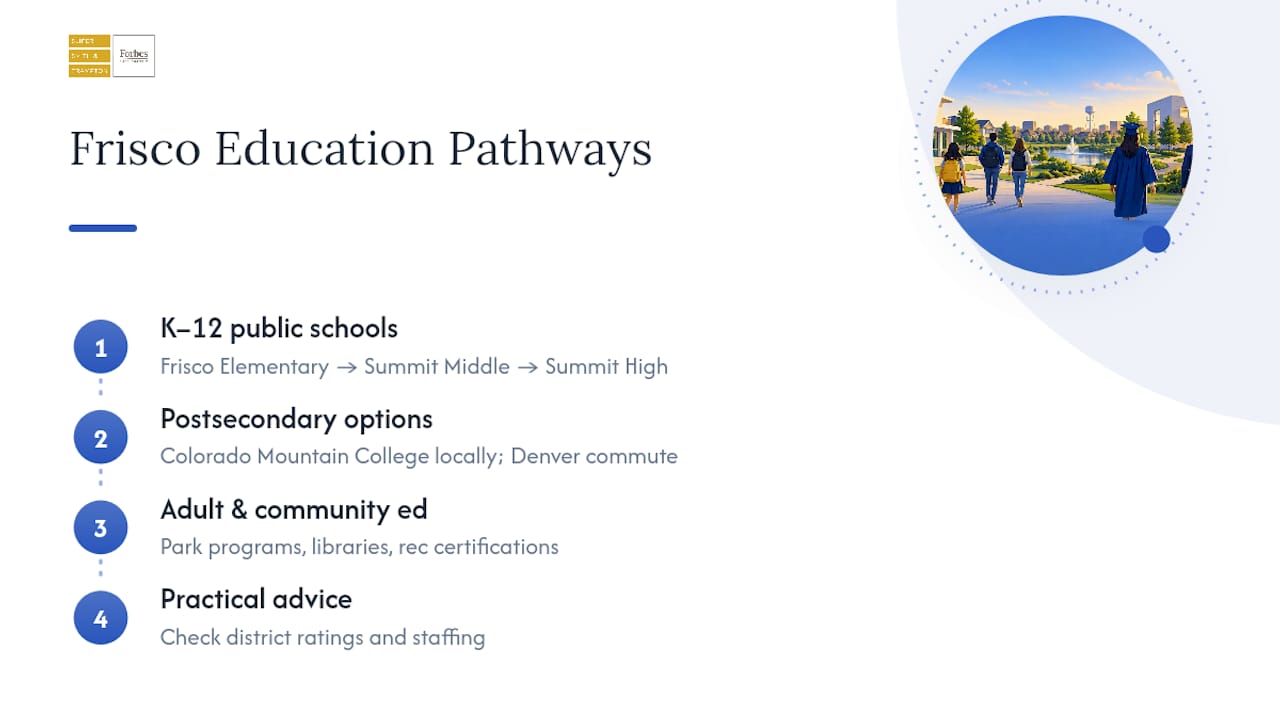
Frisco's K-6 students attend Frisco Elementary, part of Summit School District, before moving on to Summit Middle School and Summit High School in Breckenridge. Families should check current school ratings directly through the district rather than relying on aggregated scores that can lag actual enrollment and staffing changes in a district this size.
Beyond K-12, options narrow considerably given Frisco's small size and mountain location. Colorado Mountain College maintains a presence in Summit County with courses and programs geared toward working adults, offering a more accessible path to continuing education than a four-hour round trip to a Front Range university. Residents pursuing traditional four-year degrees typically commute to Denver-area institutions or study remotely.
Adult and continuing education also runs through community programs tied to the Frisco Historic Park, county library branches, and recreation-focused certifications like avalanche safety courses and wilderness first aid, reflecting the outdoor-industry backbone of the local job market. For families relocating with school-age kids, the smaller class sizes typical of Summit School District are often cited as a draw, though prospective buyers should verify current enrollment and staffing directly with the district rather than assuming past patterns hold.
Ready to Buy, Sell, or Invest in Frisco?
A local realtor can provide personalized tracking of Frisco's seasonal inventory and insight into which listings can legally operate as short-term rentals under the town's licensing cap. That distinction matters more in Frisco than almost anywhere else in Summit County, since a property's STR eligibility can swing its value and cash flow potential dramatically.
If you're not sure what your current Frisco property is worth in today's market, start with a home valuation. Buyers narrowing their search benefit from private showings scheduled around your timeline rather than open-house crowds, and investors weighing STR potential get a clearer picture through a direct comparison of comparable Summit County properties, including Summit County luxury real estate and other land and STR-rentable listings across the county.
Whether you're buying your first Frisco condo, selling a longtime family cabin, or evaluating an investment property against the town's STR waitlist, reach out through the contact page to start the conversation. A short call upfront usually saves weeks of guesswork later.
Useful Local Resources
Before you make an offer or list a property, verify STR rules directly with the town: the Short-Term Rental Guide & FAQs, Ordinance 22-10, and the STR license application and waitlist page. For nearby markets, browse Keystone homes for sale or Breckenridge homes for sale.
FAQ
Is Frisco, Colorado a good place to buy an investment property?
It can be, but short-term rental income depends entirely on securing an STR license, and the town's license cap sits at 25% of residential housing stock with a waitlist currently in place. Buyers should confirm a property's STR eligibility before assuming rental income, since recent applicants have waited twelve to fourteen months for a license.
How much does an STR license cost in Frisco?
The annual short-term rental license fee in Frisco is $250, with licenses expiring April 30 each year and requiring annual renewal. License holders must also collect and remit a composite tax rate of 15.725% on bookings.
What is the waitlist for STR licenses in Frisco?
Frisco reached its short-term rental license cap and began a waitlist system in February 2023 for new applicants. Wait times have run well over a year for some recent applicants, so buyers counting on immediate STR income should plan around that delay.
What is the cost of living like in Frisco compared to housing?
Groceries, utilities, and transportation all run higher than Front Range averages, largely due to elevation, freight costs, and seasonal heating demand, though the free Summit Stage bus system offsets some transportation expense. Housing remains the dominant cost, with a housing stock weighted heavily toward condos and second homes rather than traditional single-family primary residences.
How can a local agent help with buying or selling in Frisco?
A Summit County specialist like Jayden Vermeer tracks thin, fast-moving inventory and understands which properties qualify for STR licensing under the town's cap, a detail that directly affects pricing and investment strategy. Local guidance also helps buyers and sellers navigate HOA rental restrictions that can override town licensing eligibility, a step worth confirming early in any transaction.