
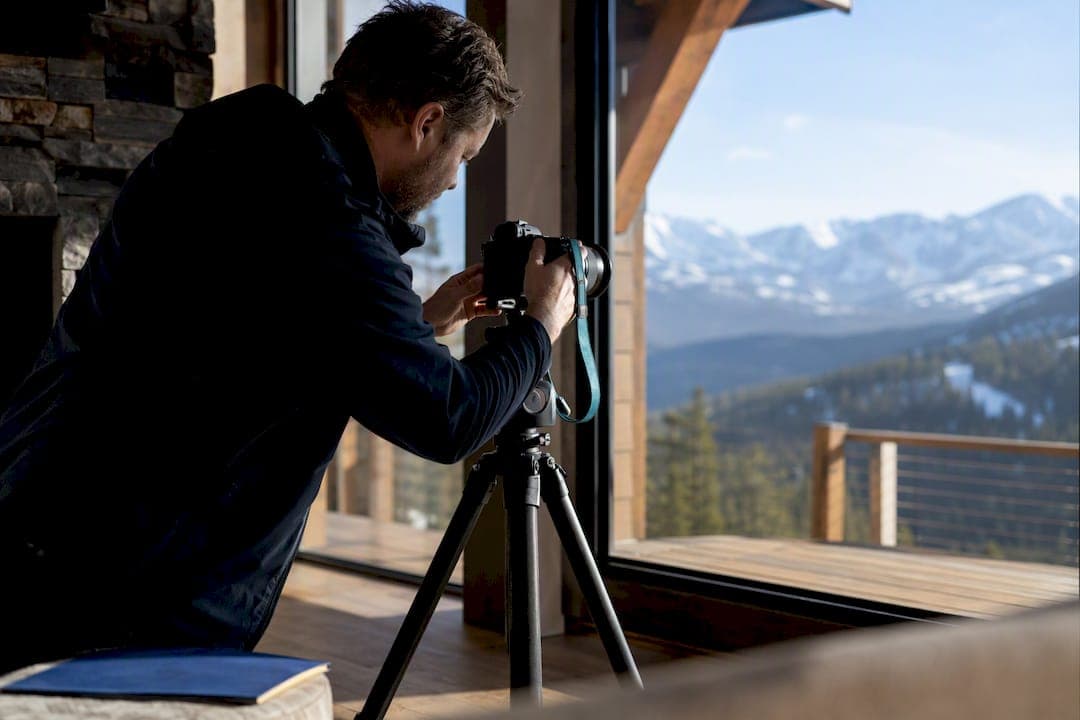
For Summit County mountain homes, listing photos must show the property in its setting, lead with a strong exterior or twilight hero shot, and prioritize the images that turn online browsing into scheduled showings. The immediate move for any Keystone, Breckenridge, Frisco, or Silverthorne seller: book a professional shoot now and confirm whether twilight or drone coverage is available for your date, since most buyers rank photos as the single most useful part of their home search. Aerial add-ons need a photographer certified under FAA Part 107. Contact a local Summit County Realtor to help coordinate the shoot with your listing timeline.
TL;DR:
- High-quality exterior and twilight shots of mountain homes significantly boost online engagement and should be prioritized in the initial images.
- Shooting during the short twilight window or using virtual editing can greatly enhance the hero image, especially for cozy cabins and mountain retreats.
- Proper staging of key rooms and exterior areas before the shoot can improve offers and reduce time on the market, particularly in winter when snow conditions matter.
- All drone photography must comply with FAA Part 107 certification, and local airspace restrictions are especially important near popular ski and mountain areas.
- The best time to photograph varies by season: winter emphasizes snow and coziness, fall highlights aspen colors, and summer showcases outdoor living spaces.
Table of Contents
- What Shots Should Be on Every Mountain Home Photo List?
- When Is the Best Time to Shoot a Mountain Home?
- How Should You Prepare a Mountain Home for Photography?
- What Are the Drone Rules for Mountain Listings in Colorado?
- How Do You Choose and Brief a Mountain Home Photographer?
- What Do Mountain Home Photography Packages Typically Include?
- How Does Jayden Vermeer Realtor Support Photo-Ready Listings?
- What Camera Gear Actually Works for Mountain Home Shoots?
- How Should Mountain Home Photos Be Edited?
- What Makes Mountain Photography Harder Than Flatland Shoots?
- How Do You Compose Shots That Highlight the Views?
- How Do the Seasons Change a Mountain Home Photo Shoot?
- Sources
- FAQ
What Shots Should Be on Every Mountain Home Photo List?
A mountain listing lives or dies on its first four to six images. Buyers scrolling through Keystone or Breckenridge listings decide within seconds whether to click further, and the correct sequencing of photos measurably increases engagement and saves. That means the shot list isn't a random collection. It's an order of operations.
Here's the priority sequence a photographer should follow for a typical mountain home or cabin:
- Hero exterior, shot in daylight with the mountain backdrop clearly visible
- Twilight hero exterior, if the property and schedule allow it (this often becomes the actual lead image)
- Primary living spaces: great room, kitchen, and primary bedroom, shot wide with natural light emphasized
- Outdoor living features: deck, hot tub, fire pit, ski access, or garage/storage for gear
- View shots from key windows or the deck, framed to show recognizable peaks or ridgelines
- Close-up or lifestyle detail shots: stone fireplace, mudroom ski storage, wood beams
For MLS purposes, most Summit County brokerages want 25 to 40 finished images, with the first six to eight doing the heaviest lifting for online scrolling and social previews.
Pro Tip: Order your gallery so the hero shot and interior flow mirror how a buyer would actually walk the property. Skipping around confuses the eye and buries your best rooms below average ones.
When Is the Best Time to Shoot a Mountain Home?
Daylight and twilight serve different jobs. Daytime exteriors work best when snow coverage, a hot tub steaming against cold air, or a sunny deck is the selling point. Twilight, often called blue hour, tends to produce the stronger hero image for cabins where warm interior lighting against a darkening sky tells the story better than a flat daytime facade.
The blue-hour window is short, usually 10 to 30 minutes after sunset, which means planning matters more than instinct. A practical timeline looks like this:
- Arrive at least an hour before sunset to stage exterior lighting and set up equipment
- Turn on all interior lights and exterior fixtures before the sky starts to shift
- Shoot the primary twilight frames during that 10 to 30 minute window, bracketing exposures for later blending
- Use a sun-tracking app to confirm exact sunset time for your specific date and elevation
One listing insight worth noting: a well-executed twilight hero shot tends to increase saves and engagement on mountain-cabin listings, largely because it isolates the warm, lived-in feel of the home against the cooling sky.
If a return twilight trip isn't feasible, virtual twilight editing is a lower-cost alternative that converts a daytime shot into a blue-hour look within about 24 hours. It works well for mid-range listings; luxury properties usually benefit more from an actual on-site twilight session.
How Should You Prepare a Mountain Home for Photography?
NAR's staging research points to three rooms buyers respond to most: the living room, primary bedroom, and kitchen. Those three deserve the most staging attention before any camera comes out, and staging paired with strong photography can modestly improve offers and reduce time on market.
Run through this sequence the morning of the shoot:
- Clear countertops, remove personal photos, and tuck away pet supplies and cleaning items
- Turn on every light fixture, including closets and under-cabinet lighting, even in daylight
- Move vehicles, trash bins, and garden hoses out of frame from the driveway and exterior angles
- Straighten outdoor furniture, clear the deck of stray gear, and stow ski equipment neatly rather than out of sight entirely
- Add one or two intentional props, like a folded blanket on a chair or firewood stacked near a hearth, without overdoing it
In winter, fresh untouched snow photographs far better than snow that's been shoveled into gray piles, so timing the shoot after a storm rather than days later pays off. In summer or fall, lean into whichever amenity fits the season: a hot tub in winter, a deck and aspen color in autumn.
Pro Tip: Walk the exterior the night before and photograph it with your phone at the same time you expect the professional shoot to happen. It reveals shadow problems, stray hoses, or a neighbor's trailer in frame before it's too late to fix.
What Are the Drone Rules for Mountain Listings in Colorado?
Any commercial drone work on a listing has to comply with FAA Part 107, which requires the pilot to hold a Part 107 certificate and follow registration and airspace rules. Before hiring anyone for aerial shots, ask to see that certification directly rather than taking a verbal assurance.
Beyond the FAA side, a few practical checks matter:
- Confirm the pilot has checked local airspace restrictions, particularly near Copper Mountain and Dillon, where terrain and air traffic patterns vary
- Get written confirmation the shoot respects neighboring property lines and privacy
- Skip drone photography for tightly wooded lots or homes with minimal view exposure. It rarely adds value there
- Reserve the aerial budget for properties where ridgeline access, acreage, or ski-in/ski-out proximity is the actual selling point
If you're marketing the property as a short-term rental, Summit County requires an STR license before any advertising begins in unincorporated areas, and that rule sits separate from any individual town's HOA or municipal short-term rental ordinance. Verify your specific parcel's status before a drone photo (or any listing photo) goes live on a booking site.
How Do You Choose and Brief a Mountain Home Photographer?
Not every real estate photographer has mountain-specific experience, and it shows in the results. A photographer used to flat suburban lots often underexposes snow, misses the ridgeline in window shots, or doesn't know how to time a twilight session at 9,000 feet where sunset behaves differently than it does at sea level.
Before booking, run through this checklist:
- Review their portfolio specifically for mountain or cabin listings, not just general real estate work
- Ask whether they've shot twilight exteriors and request two or three samples
- If drone coverage is part of the package, verify Part 107 certification directly
- Confirm insurance coverage and ask about their turnaround time for edited images
- Clarify usage rights: can the images be used across MLS, social media, and print flyers without extra fees?
A short written brief prevents miscommunication on shoot day. Include:
- The must-capture hero shot and backup angle if weather changes
- A list of interior rooms in priority order
- Any add-ons: twilight, drone, virtual tour, or floor plan
- Who handles staging (you, the agent, or a stager) and by what time
- Delivery deadline and file format needed for MLS upload
Ask directly about retouching practices, particularly sky replacement and color correction, so the final images match what a buyer will see in person.
What Do Mountain Home Photography Packages Typically Include?
Packages generally break into three tiers: a basic interior and exterior package, a premium package that adds twilight and drone coverage, and add-ons like virtual tours or floor plans layered on top of either.
Pricing tends to move with a few specific factors:
- Square footage and number of rooms, since larger mountain homes take longer to shoot and edit
- Travel time and access, particularly for properties near Blue River or more remote parts of Silverthorne
- Whether a twilight session requires a separate return trip versus same-day coverage
- Editing complexity, especially HDR blending and sky replacement work
Whatever tier you choose, require a clear deliverables list before paying: number of edited images, file formats (both high-resolution and MLS-compressed), and confirmation you own usage rights for marketing beyond the listing itself.
How Does Jayden Vermeer Realtor Support Photo-Ready Listings?
A knowledgeable local Realtor brings market insight and personalized guidance for sellers preparing their homes to go live in Keystone, Breckenridge, Frisco, Silverthorne, and surrounding Summit County communities. Coordinating photography with staging advice and pricing strategy helps keep a listing's visual presentation consistent with its market position.
A few ways this plays out for sellers:
- Reviewing your property alongside comparable Keystone condos for sale or Breckenridge condos for sale to identify which features deserve the most photographic attention
- Timing your listing launch to match seasonal photography advantages, whether that's fresh snow or peak aspen color
- Connecting sellers in Frisco and nearby towns with a coordinated marketing plan that treats photos as part of a larger pricing and positioning strategy
If you're preparing to list, consider discussing your home's valuation and photo-ready listing planning with a local real estate professional to align with your timeline.
What Camera Gear Actually Works for Mountain Home Shoots?
A full-frame camera body with strong dynamic range performs best in the high-contrast conditions common at altitude, where bright snow and deep shadow can sit in the same frame. A wide-angle lens in the 16mm to 24mm range is the workhorse for interiors and exteriors alike, since it captures full rooms and wide mountain backdrops without needing to back up onto a neighbor's lot.
A tilt-shift lens helps correct the converging vertical lines you get when shooting a tall A-frame or steep-roofed cabin from below, keeping walls looking straight rather than tipped inward. For twilight and interior work, a lens with a wide aperture (f/2.8 or faster) lets the photographer keep ISO low in dim conditions, reducing grain in the final image.
A sturdy tripod is non-negotiable for both HDR bracketing and twilight blending, since even slight camera movement between exposures ruins the merge. Photographers working at altitude should also carry extra batteries. Cold temperatures common in Breckenridge and Copper Mountain winters drain battery life faster than at lower elevations, and a dead battery mid-shoot on a tight twilight window is a problem you can't fix by rescheduling the sunset.

A polarizing filter cuts glare off windows and snow, which matters constantly in a market where reflective surfaces are everywhere from October through April.
How Should Mountain Home Photos Be Edited?
HDR blending is standard for mountain listings because a single exposure almost never captures both a bright window view and a shadowed interior corner. Blending three to five bracketed exposures keeps detail in both the sky and the room without the flat, over-processed look that gives away heavy HDR work.
Color correction matters more here than in flatter markets, since snow and evergreen foliage both throw unusual color casts. Snow photographs blue under overcast skies and warm under direct afternoon sun, so a photographer needs to correct white balance to match how the scene actually looked, not just what the sensor recorded.
Sky replacement is common for twilight work and for daytime shots taken under a flat, gray sky. Used well, it swaps a dull sky for a naturally lit one without altering the property itself. Used poorly, it creates a mismatch between the lighting on the house and the lighting in the replaced sky, which sharp-eyed buyers notice immediately. Ask any photographer directly whether sky replacement is part of their standard workflow and how they handle it for twilight exteriors.
Final exports should include both full-resolution files for print flyers and compressed, MLS-ready versions sized to your local board's upload requirements.
What Makes Mountain Photography Harder Than Flatland Shoots?
Weather changes fast at elevation. A clear morning in Silverthorne can turn overcast by early afternoon, which means photographers need flexible scheduling and a backup plan rather than a single rigid shoot date. Wind is a bigger factor too, especially for drone work, where gusts common above tree line can ground a flight entirely.
Light behaves differently at altitude as well. Thinner atmosphere means harsher, more contrasty light during midday hours, which is part of why golden hour and blue hour carry extra weight in mountain photography compared to flatter markets where midday shooting is more forgiving.
Altitude itself affects the photographer, not just the camera. Shoots above 9,000 feet, common around Keystone and Copper Mountain, can leave photographers hauling gear short of breath, which slows setup time and makes efficient shot planning more important than usual.
Snow glare is its own challenge. Bright snow can trick a camera's metering system into underexposing the rest of the frame, which is where bracketing and careful manual exposure control earn their keep. Photographers unfamiliar with mountain conditions sometimes come away with washed-out skies or underexposed interiors because they trusted automatic settings that were calibrated for flatter, less reflective terrain.
How Do You Compose Shots That Highlight the Views?
Framing decisions make or break a mountain listing's sense of place. A window or deck shot that centers the most recognizable peak or ridgeline, rather than cropping it awkwardly at the edge, does more to sell the location than any caption ever could.
Leading lines work especially well in mountain settings. A deck railing, a fence line, or even a driveway can pull the eye from the foreground toward the mountains beyond, giving depth to what would otherwise be a flat composition. Shooting from a slightly low angle on a home with an elevated deck captures the underside of the deck, the glowing interior light, and a slice of ridgeline in one frame, a composition that often replaces two or three separate daytime shots.
Rule-of-thirds placement matters for view shots specifically. Positioning the horizon line in the lower third of the frame, rather than dead center, gives the sky and mountains room to breathe and avoids the cramped feeling of an overly literal composition.
Foreground interest, like a stone patio, a snow-dusted railing, or fall aspen leaves, anchors the shot and prevents distant peaks from reading as a flat backdrop. Interior shots benefit from the same logic in reverse: frame a window so the mountain view is visible but not the sole focus, keeping the room itself as the primary subject.
How Do the Seasons Change a Mountain Home Photo Shoot?
Winter listings sell on snow and coziness. Fresh powder, a steaming hot tub, and warm interior lighting against a snowy backdrop make winter one of the strongest seasons for mountain home photography, provided the shoot happens soon after a storm rather than once plowing and foot traffic have turned the snow gray.

Fall offers a narrow but valuable window. Aspen color peaks for roughly two to three weeks in late September into early October across Summit County, and a listing photographed during that stretch captures a burst of color that a winter or summer shoot simply can't replicate.
Summer favors deck and outdoor living shots, green landscaping, and clear-sky mountain views without snow glare complicating exposure. It's also the most forgiving season for scheduling, since long daylight hours give photographers more flexibility around golden hour and twilight timing.
Spring is the trickiest season to shoot well. Melting snow often leaves muddy yards and patchy, unattractive ground cover, which is part of why many sellers hold off on new photography until either late spring greenery fills in or the following winter's first clean snowfall.
Whatever season you're working with, matching the shoot to the property's strongest seasonal asset, rather than defaulting to whatever season the listing happens to launch in, tends to produce a stronger hero image.
Sources
- Putting a lens on listing photos (NAR)
- FAA commercial drone operator guidance
- Summit County short-term rental regulations and resources
FAQ
Do I Need a Twilight Shot for My Mountain Home Listing?
Not always, but it helps significantly for cabins and homes where the exterior lighting and mountain backdrop are strong selling points. A properly timed twilight hero shot tends to increase engagement and saves compared to a daytime-only gallery, though virtual twilight editing offers a lower-cost alternative for mid-range listings.
Does My Photographer Need FAA Certification for Drone Shots?
Yes. Any commercial drone photography for a listing must comply with FAA Part 107, which requires the pilot to hold a Part 107 certificate and follow registration and airspace rules. Ask to see the certification directly before booking aerial coverage.
Can I Advertise My Mountain Home as a Short-Term Rental Right After Photos Are Done?
Not in unincorporated Summit County without a license first. The county requires an STR license before any advertising begins, so confirm your parcel's licensing status before publishing rental listings or booking-site photos.
How Many Photos Should a Mountain Home Listing Include?
Most Summit County MLS listings perform best with 25 to 40 finished images, with the first six to eight carrying the most weight for online scrolling. The lead image and its sequencing directly affect engagement and saves, so prioritize your strongest exterior or twilight shot first.
What's the Best Season to Photograph a Mountain Home?
It depends on the property's strongest feature: winter suits homes with hot tubs or dramatic snow settings, fall works well during the brief aspen color window in late September to early October, and summer is best for deck and outdoor living shots. Match the season to the amenity you want to sell.
Ready to pair professional photography with a full listing strategy for your Summit County property? Contact Jayden Vermeer Realtor to talk through your What's Your Home Worth? valuation and get your mountain home photo-ready for the market.