
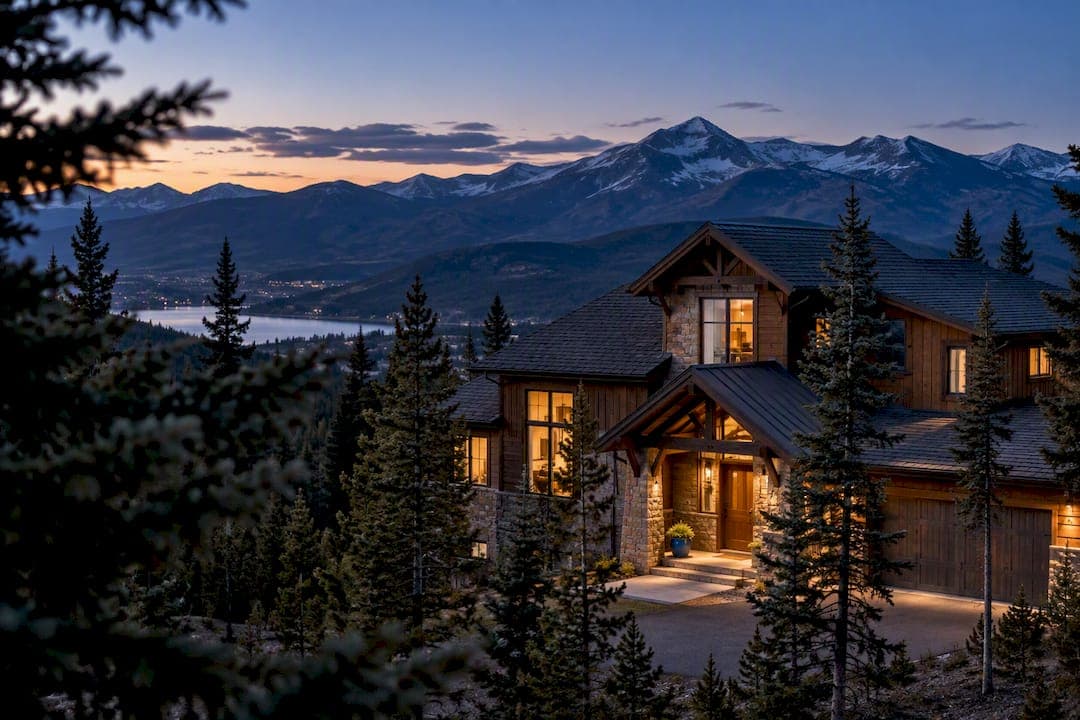
If you own a mountain home in Keystone, Breckenridge, Frisco, Dillon, Silverthorne, Copper Mountain, or Blue River, this is a reasonable window to list, provided you price off real local comps and clear three hurdles first: short-term rental license transferability, Colorado's updated disclosure form, and how your tax basis is allocated. Start with a comparative market analysis from a local agent, not a national estimator, and get ahead of those three issues before you sign a listing agreement.
TL;DR:
- Local comparisons within specific mountain communities are more accurate than countywide data for pricing and understanding market trends.
- Pricing strategies should consider premium features like ski access, views, and rental income, with flexibility based on demand and inventory levels.
- Addressing maintenance issues such as roof, snow load, winterization, and moisture problems before listing can prevent inspection failures.
- Short-term rental licenses are often non-transferable, so verify license status and HOA restrictions early to avoid surprises during negotiations.
- The new Colorado disclosure form, effective January 1, 2026, requires sellers to disclose current knowledge of property issues, and tax implications depend on rental versus personal use.
Table of Contents
- What Does Summit County Market Data Say About Selling a Mountain Home Now?
- How Do You Price a Mountain Home to Sell?
- What Should You Fix and Market Before Listing?
- What Legal Disclosures and Tax Rules Apply to a Mountain Home Sale?
- How Does an STR License Affect Who Buys Your Home?
- How Jayden Vermeer Helps You Sell a Mountain Home in Summit County
- Sources
- FAQ
What Does Summit County Market Data Say About Selling a Mountain Home Now?
Summit County values residential property using the market approach, which means recent sales of comparable homes drive assessed value, not construction cost or income projections. The current reappraisal cycle uses an appraisal date of June 30, 2024, pulling sales from an 18 to 60 month window. That gap between appraisal date and today matters: your county-assessed value may already lag behind what buyers are actually paying, especially if your neighborhood has seen a run of recent closings.
For mountain condos and ski-area single-family homes, town-level comps beat county-wide averages every time. A three-bedroom ski-in property in Keystone doesn't trade like a similar-sized home in Dillon, even though both sit in the same county. Before you set an asking price, pull actual closed sales from your own community using the assessor's public tools.
- Check the county's sales data lists and comparable-sales mapping tool for closings in your specific subdivision.
- Understand how the assessor's mass appraisal methodology adjusts sales for property characteristics like square footage, view, and condition.
- Treat regional indices as context, not gospel: the FHFA purchase-only house price index for the Mountain Census Division tracks broad regional trends but won't reflect what a specific Breckenridge condo building is doing this quarter.
Pro Tip: Pull your own comps from the assessor's site before you talk to any agent. It won't replace a professional CMA, but it will help you spot a lowball or an inflated number fast.
How Do You Price a Mountain Home to Sell?
Pricing a ski-area property takes more inputs than a typical suburban home because buyers pay premiums for things a standard CMA template doesn't always weight correctly: ski access, view corridors, and rental history. Here's a straightforward process.
- Build your comp set first. Pull closed sales from the same community, and if you're selling a condo, prioritize condo-to-condo comparisons within the same building or complex over single-family comps. A Frisco townhome and a Frisco condo can sell at very different price points per square foot.
- Adjust for what actually moves mountain-home value. Ski-in/ski-out access, unobstructed mountain views, elevation, garage or heated parking, HOA amenities like a hot tub or shuttle service, and current condition all swing price. If your unit carries an active STR license and documented rental income, that's a real adjustment too, not just a bonus talking point.
- Choose your pricing tactic. An aggressive price near or above recent comps works when inventory is thin and buyer demand is strong for your specific town. A market-rate price matched tightly to your best three comps reduces days on market and lowers renegotiation risk. A value-capture price, listed slightly under comps, can generate multiple offers in a tight window but only works when you're confident in genuine buyer demand, not just hope.
Decide early whether to fix problems or price around them. A failing roof or a moisture issue in a crawl space is worth repairing before listing in most cases, because buyers financing through conventional or FHA loans may require it addressed before closing anyway. Cosmetic wear, older finishes, or dated appliances are usually better handled with a price adjustment than a renovation you won't fully recoup.
Pro Tip: If your home has an active STR license, ask your agent to build two versions of the CMA: one weighting the rental income history, one without it. That range tells you how much of your asking price the license itself is really worth.
What Should You Fix and Market Before Listing?
Mountain homes fail inspections and lose buyers over problems that are entirely preventable if you catch them early. Prioritize the checks that matter most at altitude.
- Roof and snow load. Ask for a roof inspection if it hasn't been checked in the last few years; ice dams and snow load stress cause damage that's invisible from the ground.
- Winterization systems. Confirm heat tape, pipe insulation, and the furnace or boiler are all functioning. A frozen pipe discovered during a buyer's inspection kills momentum fast.
- Moisture and mold. Crawl spaces and lower levels in mountain construction are prone to dampness. Address it before it shows up on an inspection report.
- Access. Confirm driveway plowing arrangements, HOA snow removal responsibilities, and whether four-wheel-drive access is seasonal or year-round. Buyers unfamiliar with mountain living will ask.
Staging and photography for ski-area buyers should show what they're actually paying for: proximity to lifts or trails, mountain views from the main living space, and evidence the home performs well in winter. A photo of a snow-covered deck with a hot tub steaming does more work than ten interior shots of a tidy kitchen.
Buyers shopping mountain homes, especially out-of-area buyers, expect a specific document set ready at listing: a rental income ledger if the property has STR history, current HOA rules and any recent special assessments, a recent inspection report if you've had one done, and written confirmation of snow removal arrangements. Having these ready before your first showing shortens due diligence and reduces the chance a buyer walks after finding a surprise mid-contract.

Market beyond the standard MLS listing. Tag the listing appropriately for ski-area search filters, consider targeted campaigns aimed at out-of-area and second-home buyers, and lean on listing pages built specifically for the town, whether that's Keystone condos and townhomes or Breckenridge condos. Buyers searching for a specific mountain town rarely start on a generic national portal.
What Legal Disclosures and Tax Rules Apply to a Mountain Home Sale?
Colorado sellers face a real disclosure obligation, and it's changing. Starting January 1, 2026, the Seller's Property Disclosure form must be completed by the seller based on current actual knowledge, not filled out by an agent on your behalf. It requires disclosure of known adverse material facts, and the form's specific categories cover a lot of ground you should gather documentation well before listing:
- Environmental conditions, including radon test results if you have them
- Structural movement, cracking, or settling issues
- Past insurance claims filed on the property
- Moisture, water intrusion, or past mold remediation
- Any known code violations or unpermitted work
On the tax side, if you've rented your mountain home short-term at any point, the sale gets more complicated than a straightforward personal residence. The IRS requires you to allocate the selling price and basis between personal and rental use, and any depreciation you claimed on the rental portion reduces your basis and can trigger recapture at sale. That same rental use can also limit how much of your gain qualifies for the standard main-home exclusion. This is genuinely a conversation for a tax professional before you list, not after closing.
How Does an STR License Affect Who Buys Your Home?
Short-term rental status changes your buyer pool and what you need to prove. Summit County requires STR licensing for rentals under 30 days in unincorporated areas, and incorporated towns run their own separate licensing systems. Critically, many of these licenses are non-transferable, meaning a buyer often cannot simply inherit your rental permission at closing.
- Documented rental income history still has real value to investor buyers, even without a transferable license, because it shows demand and realistic revenue potential for the property type.
- Present that history clearly, but never imply the license itself passes to the new owner. A buyer's agent will catch that misrepresentation fast, and it can jeopardize the deal.
- Check both county and town rules before listing. Some towns cap the total number of active STR licenses in a given area, which can affect how quickly (or whether) a buyer could obtain their own license later.
- HOA covenants sometimes restrict short-term rentals independently of town or county licensing, so a property can be legally licensable but still barred by its own HOA.
Pro Tip: Verify your STR license status and HOA rental restrictions before you list, not after an offer comes in. A buyer who finds out mid-contract that rental use is capped or restricted will renegotiate or walk.
How Jayden Vermeer Helps You Sell a Mountain Home in Summit County
Pricing a ski-area property, sorting out STR license status, and getting Colorado's disclosure form right all take local, hands-on knowledge, not a generic online estimate. This is the gap local Realtors fill for Summit County sellers: hyper-local expertise across Keystone, Breckenridge, Frisco, and the surrounding towns, paired with pricing strategies built around actual community-level comps instead of countywide averages.
Working with a local agent on your sale typically means a few concrete things happen before your home ever hits the market: a custom comparative market analysis built from recent sales in your specific community, a check on STR license and HOA rental restrictions so there are no surprises mid-contract, and a marketing push aimed at the buyers who actually shop mountain towns, including out-of-area and second-home buyers. Start with What's Your Home Worth? for a valuation, or review current inventory in your own community, whether that's Breckenridge homes for sale or luxury listings through the Private Property Comparison service. When you're ready to talk specifics about your property, reach out through the contact page to set up a conversation about your timeline and pricing strategy.
This article is general information, not a substitute for advice from a qualified financial advisor. Consult a qualified financial professional about your own circumstances before acting on anything here.
Sources
- Summit County assessor: real property valuation
- Colorado Seller's Property Disclosure (Residential) form
- IRS Publication 544 (2025): Sales and Other Dispositions of Assets
FAQ
Is Now a Good Time to Sell a Mountain Home in Summit County?
Timing depends more on your specific town and property type than on any broad regional trend. Pull recent closed sales from your own community using the county assessor's sales data tool before deciding, since a strong Breckenridge condo market doesn't guarantee the same demand in Dillon or Silverthorne.
Do I Need a New Disclosure Form to Sell in 2026?
Yes. Colorado requires sellers to complete the updated Seller's Property Disclosure form themselves starting January 1, 2026, based on current actual knowledge rather than an agent filling it in for you.
Will My Short-Term Rental License Transfer to the Buyer?
Usually not. Many Summit County and town-level STR licenses are non-transferable, so buyers typically need to apply for their own license, and some towns cap the number of active licenses available.
How Do I Get an Accurate Price for My Mountain Home?
Start with a comparative market analysis built from sales in your specific community rather than countywide averages. Jayden Vermeer Realtor offers a free home valuation that factors in local comps, condition, and rental history where applicable.
Do I Owe Taxes on the Sale if I Rented My Home Short-Term?
It depends on how much personal versus rental use the property saw. The IRS requires allocating the sale price and basis between personal and rental portions, and depreciation you claimed can reduce your exclusion eligibility, so talk to a tax professional before closing.