
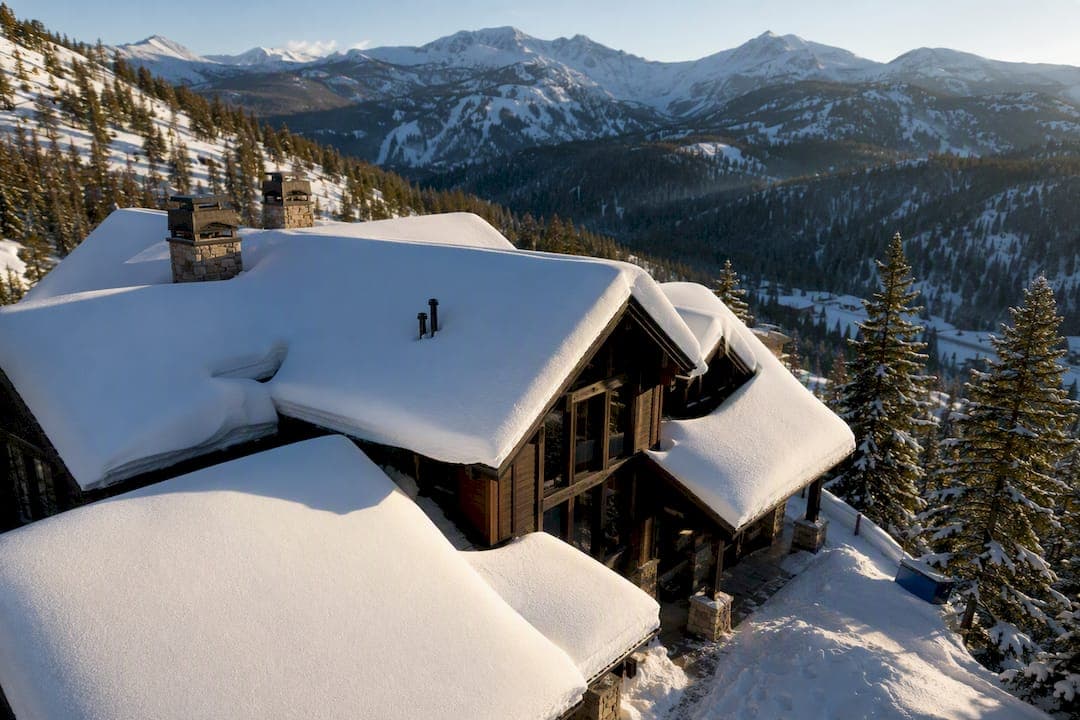
Roof snow load is the weight of accumulated snow a roof must safely carry without bending, cracking, or collapsing. If you own or manage property in Summit County, Colorado, the first move is simple: find your roof's design value in the local building code or ASCE 7 tables, and if you can't confirm it, call a licensed structural engineer before winter piles up. Ground snow and roof snow are not the same number, and mixing them up is where most bad decisions start.
TL;DR:
- A roof's actual snow load can significantly exceed ground snow load estimates due to wind drift, melting patterns, and roof design features, requiring precise calculations.
- Local amendments and updated ASCE 7-22 maps can raise or lower your region’s baseline snow load, emphasizing the need to confirm current values with your building department.
- Common risk factors that increase roof snow load include drifts against parapets, snow sliding from steep upper roofs, and obstructions trapping drifting snow, especially in mountain environments.
- Routine snow removal should target unbalanced drifts and avoid damaging materials, with professional help recommended for heavy or uncertain accumulations.
- Always verify the design snow load from original permits or local engineers, especially in mountainous areas like Summit County, since regional differences influence safe roof capacity.
Table of Contents
- What's the Difference Between Ground Snow Load and Roof Snow Load?
- How Is Roof Snow Load Calculated? ASCE 7 and the Hazard Tool
- What Factors Actually Increase Snow Load on a Roof?
- What Code Changes Affect Roof Snow Load Requirements in Colorado?
- When Should You Remove Snow From Your Roof?
- Should You Call a Roofing Contractor or a Structural Engineer?
- What Should Summit County and Colorado Property Owners Do Next?
- Local Referrals for Summit County Roof and Structural Questions
- Sources
- FAQ
What's the Difference Between Ground Snow Load and Roof Snow Load?
Ground snow load (often labeled Pg) is the weight of snow sitting on open, flat ground in a given area, measured in pounds per square foot. Roof snow load (Pf or Ps) is what actually ends up on your roof after wind, shape, and heat move that snow around. The two numbers are related, but treating the ground figure as your roof's design capacity is one of the more common and costly mistakes homeowners and even some builders make.
ASCE 7 Chapter 7 converts ground snow load into a flat-roof design value using several adjustment factors:
- Exposure factor: accounts for wind exposure at the site, since windswept roofs shed more snow than sheltered ones.
- Thermal factor: reflects how much heat escapes through the roof, since a heated structure holds less snow than an unheated one.
- Importance factor: scales the load based on the building's risk category (a fire station carries a higher standard than a storage shed).
- Slope factor: reduces load on steep roofs, since snow slides off pitched surfaces faster than flat ones.
Here's where it gets interesting for mountain properties: a low, flat roof section tucked below a steeper upper roof can end up with a higher local snow load than the open ground nearby, simply because wind and sliding snow dump extra weight right at that transition. That's a drift, and it's often the difference between a roof that holds and one that doesn't.
How Is Roof Snow Load Calculated? ASCE 7 and the Hazard Tool
ASCE 7 Chapter 7 is the primary engineering reference for snow load design in the United States, and the International Building Code (IBC) incorporates it by reference rather than reinventing its own snow methodology; that means your local building department is almost always pointing back to ASCE 7 when it asks for a design snow load on your permit application.
Two inputs drive the calculation:
- Risk category: determined by how the building is used (residential, assembly, essential facility), which sets the importance factor.
- Ground snow load map value: the baseline figure for your specific site, pulled from updated national maps or a site-specific study.
The ASCE Hazard Tool is the resource most designers use to pull that ground snow load figure by address, and it outputs both allowable-stress design (ASD) and strength-based values depending on which design method a project uses. Enter your coordinates, and it returns the mapped ground snow load your engineer will use as the starting point for the roof calculation.
ASCE 7-22 and the 2024 IBC introduced meaningful updates here, including revised ground-snow maps, new strength-based load values, and a winter wind parameter (called W2) that feeds into drift calculations. If your home or commercial building was permitted under an older code cycle, its stamped design value may no longer match what a new build on the same lot would require today.
What Factors Actually Increase Snow Load on a Roof?
Several site and design conditions push actual roof loads well above the baseline number, and knowing where to look during a walk-around inspection can save you from a nasty surprise.
- Drift formation: Snow piles up on the downwind side of parapets, higher adjoining roofs, and rooftop equipment, often doubling or tripling the load in that specific zone compared to the open field of the roof.
- Sliding snow: A steep upper roof can dump its entire snowpack onto a lower roof section below it, concentrating weight right where valleys, entryways, or lower additions sit.
- Roof pitch and material: Low-slope and flat roofs hold snow far longer than steep metal roofs, where snow's angle of repose lets it shed naturally once it builds past a certain depth.
- Rooftop obstructions: Solar panels, HVAC units, chimneys, and vent stacks all create little dams that trap drifting snow, and this is increasingly relevant as more Summit County homeowners add solar arrays.
- Thermal behavior: A well-insulated, tightly sealed roof holds snow longer because little heat escapes to melt it, while a warm, poorly insulated attic melts snow from below, sending water down to refreeze as ice dams at the eaves.
Pro Tip: Walk your roofline after the first big storm of the season and note where drifts form against dormers, chimneys, or adjoining roof planes. Those spots deserve extra attention every year, since drift patterns tend to repeat in the same locations winter after winter.
What Code Changes Affect Roof Snow Load Requirements in Colorado?
The IBC references ground snow loads directly in its structural provisions, then defers to ASCE 7 for the engineering method that turns that ground value into an actual roof design load. That layered structure is why your local building department's permit checklist usually just cites a number and a code year rather than walking you through the math.
ASCE 7-22 changed several pieces of that math at once:
- Updated ground-snow maps that raise or lower baseline values depending on region, replacing older, coarser zone maps with more granular data.
- A new winter wind parameter (W2) that factors into drift load calculations, which matters most for buildings near ridgelines or in wind-exposed mountain terrain.
- Strength-based design values alongside the traditional ASD figures, giving engineers two paths depending on which design method a project uses.
Local governments layer their own amendments on top of these national standards, and Colorado offers a clear example of why that matters. Denver's 2025 code amendment raised the service-level ground snow load from 35 psf to 43 psf, while also allowing site-specific values through the ASCE Hazard Tool for projects that want a more precise number than the flat citywide figure. Summit County jurisdictions set their own values, and given the elevation and terrain here, they can differ meaningfully from a Front Range city. Always confirm the current design value with your local building department rather than assuming a number from another Colorado town applies to your address.
When Should You Remove Snow From Your Roof?
Compare the depth and density of the snow on your roof against your building's stamped design load, and when you genuinely can't tell whether you're approaching that limit, treat that uncertainty itself as the signal to call a licensed structural engineer.
- Check for warning signs first: sagging ceiling tiles, doors that suddenly stick, popping or cracking sounds, and visible roof deflection all mean stop guessing and get a professional opinion immediately.
- Remove drifts and unbalanced accumulations before flat areas, since uneven loading concentrated in one section is more dangerous to the structure than an even blanket of snow across the whole roof.
- Work in the direction of the primary structural members, not against them, and avoid piling removed snow into new drift zones on lower roof sections.
- Skip metal shovels, ice picks, and heavy rooftop machinery, all of which risk puncturing membranes or shingles and turning a snow problem into a leak problem.
FEMA's snow load guidance is blunt on one point: unbalanced loads from drifting and sliding create more structural hazard than uniform accumulation, even when the uniform load looks heavier at first glance. For steep pitches, multi-story homes, or anything with tricky access, hire a professional with roof snow removal experience rather than climbing up yourself.
Should You Call a Roofing Contractor or a Structural Engineer?
A roofing contractor is the right call for routine snow removal, ice dam mitigation, and inspecting the roof covering itself for wear. A licensed structural engineer (PE) is the right call when you suspect the framing, trusses, or load path may be undersized, or when you're renovating and adding weight like solar panels or a new roof material.
Before you call either one, gather what helps them work faster:
- Your building's stamped design snow load, if you can locate it in permit records or original drawings.
- Framing plans or truss layouts, especially for additions or older structures.
- Photos and rough measurements of any drift accumulation, sagging, or cracking you've noticed.
If you suspect an active overload, keep occupants clear of the area below the affected roof section, document any visible deflection with photos and a timestamp, and contact your local building department immediately if the situation looks hazardous.
What Should Summit County and Colorado Property Owners Do Next?
Colorado jurisdictions are gradually adopting ASCE 7-22, and local amendments similar to Denver's can shift design snow loads without much fanfare. If you own property in Keystone, Breckenridge, Frisco, Dillon, or Silverthorne, don't assume your roof's design value matches a neighboring town's.
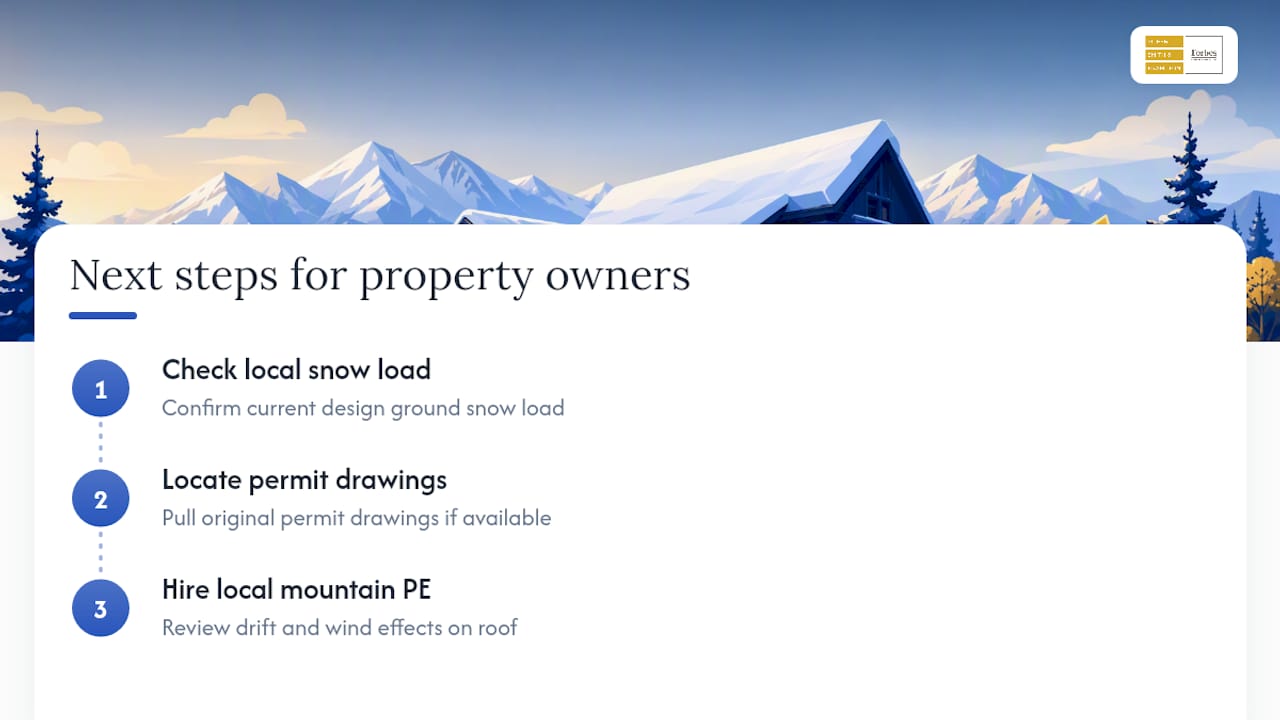
Start by contacting your county or town building department to confirm the current design ground snow load for your address, then pull your original permit drawings if you have them. If anything looks off, a local PE with mountain snow-load experience will know how regional drift and wind patterns here differ from Front Range assumptions.
Local Referrals for Summit County Roof and Structural Questions
Local real estate experts in Keystone, Breckenridge, Frisco, Dillon, and Silverthorne have direct, firsthand familiarity with how these mountain properties handle heavy winters, and which local contractors and engineers actually know the terrain.
If you're buying a property here and want to understand what a seller's roof disclosures actually mean, or you're selling and want to understand how roof condition can affect your listing, local context matters more than a generic home inspection checklist. Property shoppers exploring Keystone condos, Breckenridge condos, or homes around Frisco often ask the same question: how do I know if this roof was built for our snow? Reach out through the contact page for a referral to a local contractor or structural engineer familiar with Summit County's building departments, and get a straight answer before you sign anything.
Sources
- Snow Load Safety Guide (FEMA / GPO publication)
- 2024 IBC significant structural changes — loads (Structure Magazine)
- ASCE Hazard Tool
- Significant changes to Denver amendments (2025)
FAQ
What Type of Roof Is Best for Handling Heavy Snow?
Steep-pitched metal roofs generally shed snow faster than low-slope or flat roofs, thanks to a lower angle of repose that lets accumulated snow slide off on its own. That said, the "best" roof for your property depends on the site's drift exposure, framing design, and local code requirements, so a licensed engineer should confirm the framing matches whatever roofing material and pitch you choose.
How Do I Calculate the Snow Load on My Roof?
Start with your site's ground snow load value from the ASCE Hazard Tool, then apply the exposure, thermal, importance, and slope factors from ASCE 7 Chapter 7 to convert that ground figure into a roof design value. Most homeowners should let a structural engineer or their local building department confirm the final number rather than calculating it themselves, since drift and wind adjustments require site-specific judgment.
Should I Worry About Roof Snow Load?
You should pay attention if you notice sagging, cracking sounds, sticking doors, or visible drift accumulation against dormers and adjoining rooflines, since unbalanced loads create more risk than even snow cover. Most roofs built to current code handle a typical Colorado winter without issue, but older structures, additions, or roofs with heavy drift exposure deserve a periodic check from a professional.
What's the Difference Between Ground Snow Load and Roof Snow Load?
Ground snow load measures snow depth on open, flat terrain, while roof snow load reflects what actually accumulates on your specific roof after wind, slope, and heat redistribute it. A roof section below a drift zone can carry a higher load than the ground snow load number would suggest, which is exactly why the ASCE 7 conversion factors exist.