
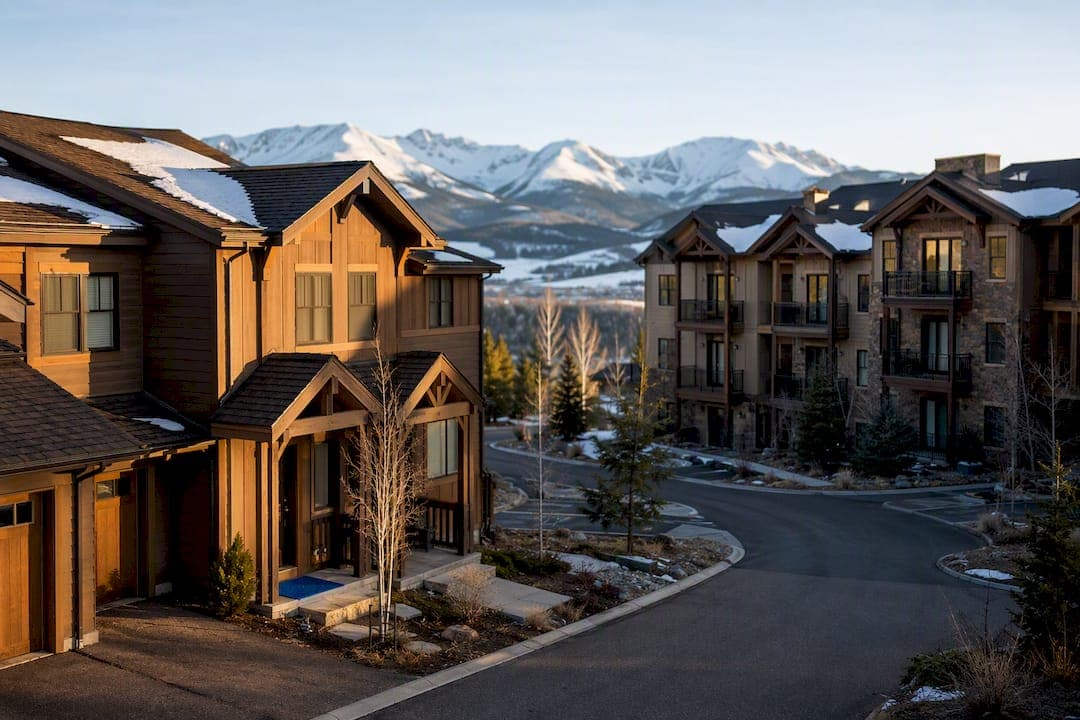
If you want low maintenance, shared amenities, and a lock-and-leave lifestyle, a condo usually fits best. If you want more privacy, your own patch of land, and easier financing, a townhome usually wins. Either way, verify the HOA documents before you write an offer. The checklist below turns that comparison into concrete next steps for Summit County buyers.
TL;DR:
- Townhome ownership includes the land and structure, which can impact taxes, insurance, and repair responsibilities, unlike condominiums that typically only own interior space.
- HOA fees are generally higher for condos due to coverage of exterior maintenance, shared amenities, and common systems, with reserves and recent assessments crucial for cost stability.
- Maintenance responsibilities in townhomes are less clearly defined, often causing disputes over shared systems like roofs or exterior walls, requiring confirmed written responsibilities before buying.
- Townhomes usually qualify for standard financing, while condos may face additional project-level reviews and restrictions that delay or block lending, especially for FHA loans.
- Summit County's short-term rental rules and winter maintenance costs vary by town, influencing resale timing, HOA policies, and ongoing land ownership advantages for townhomes.
Table of Contents
- Townhome vs Condo: What Do You Actually Own?
- HOA Fees and What They Actually Cover
- Who Fixes What: Maintenance in Practice
- Financing and Resale: Where Ownership Type Shows Up
- Lifestyle Tradeoffs: Privacy, Noise, and Amenities
- Your Decision Checklist Before Making an Offer
- Buying in Summit County: What's Different Here
- Get Local Help Choosing Between a Townhome and a Condo
- Sources
- FAQ
Townhome vs Condo: What Do You Actually Own?
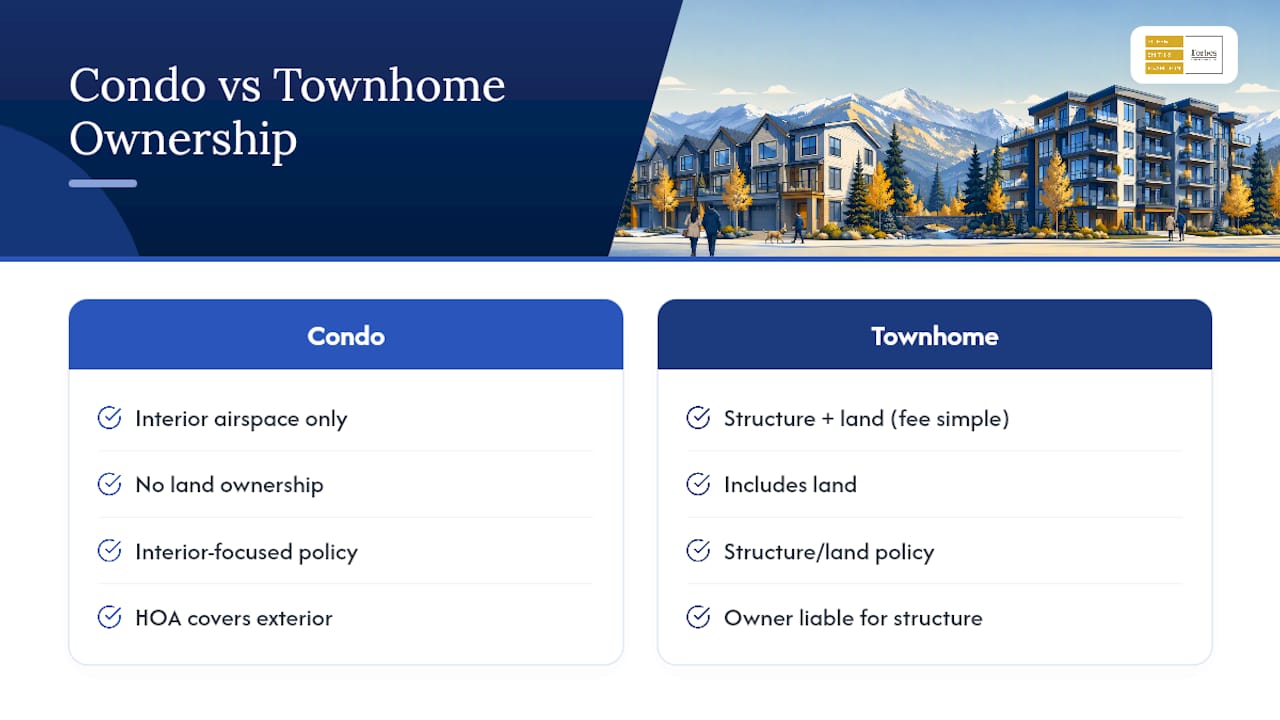
The building's exterior tells you almost nothing about what you're buying. A condo typically means you own the interior airspace of your unit, while a townhouse usually means you own the structure itself plus the land underneath it, a setup known as fee simple, according to Opendoor's breakdown of condo and townhome ownership.
That legal distinction gets decided by recorded documents, not by whether the place has stairs or shares a wall. A North Carolina Real Estate Commission brochure on condos and townhouses confirms the same split: condo owners hold interior space, townhouse owners generally hold the structure and land, and both types come wrapped in common areas and HOA dues. Some townhouse-style units are actually structured as condominiums on paper, so appearance can mislead you, a point Better Homes & Gardens makes clearly.
Why does this matter beyond curiosity? Your ownership structure determines your insurance policy type, which repairs fall to you versus the HOA, and how you're taxed on the land component. Ask your title company or the listing agent to confirm the legal structure before you assume anything based on curb appeal.
HOA Fees and What They Actually Cover
Condo HOA fees tend to run higher because condo associations usually cover exterior maintenance, roofing, landscaping, and shared amenities like pools or fitness rooms, according to Experian's comparison of condo and townhouse costs. Townhome HOAs often cover less, sometimes just common grounds and community structures, which shifts more maintenance cost onto you directly.
Dues scale with what the association actually maintains. A building with elevators, a shared roof system, and a clubhouse needs a bigger budget than an HOA that only mows the common lawn, and Nolo's cost comparison of condos, townhomes, and single-family homes backs up that pattern.
Before you get attached to a listing, request:
- The HOA's current operating budget and reserve study
- The last 12 months of board meeting minutes
- Any pending or recent special assessments
- The association's insurance certificate
Pro Tip: Total monthly housing cost equals your mortgage payment plus HOA dues plus insurance plus property taxes plus a personal maintenance reserve. Comparing sticker price alone between a townhome and a condo will mislead you almost every time, a point Opendoor also emphasizes when weighing total cost of ownership.
A thin reserve fund is the warning sign that matters most. If the reserve study shows the association is underfunded for an upcoming roof or repaving job, expect a special assessment, a one-time bill that can run into the thousands and land on you regardless of how long you've owned the unit.
Who Fixes What: Maintenance in Practice
Condo owners generally handle only their interior, while the HOA takes care of the roof, exterior walls, and shared systems. Townhome owners often handle their own exterior, roof, and yard unless a specific HOA or planned unit development agreement says otherwise.
That "unless" clause causes most of the disputes. Unclear bylaws or vague maintenance boundaries between a townhome owner and the HOA are a known source of unexpected costs and conflict, according to Nolo's research on HOA fees and disputes. A shared roof over two attached townhomes is a classic flashpoint. If the HOA doesn't fund it and the declaration doesn't clearly assign it, you and your neighbor could end up negotiating a repair bill on your own.
Before you make an offer, confirm:
- Who is responsible for the roof, siding, and gutters in writing
- Whether the HOA or PUD covers snow removal on shared driveways
- What the seller's disclosure says about past exterior repairs
- Whether any shared systems (like a party wall) have documented maintenance history
Financing and Resale: Where Ownership Type Shows Up
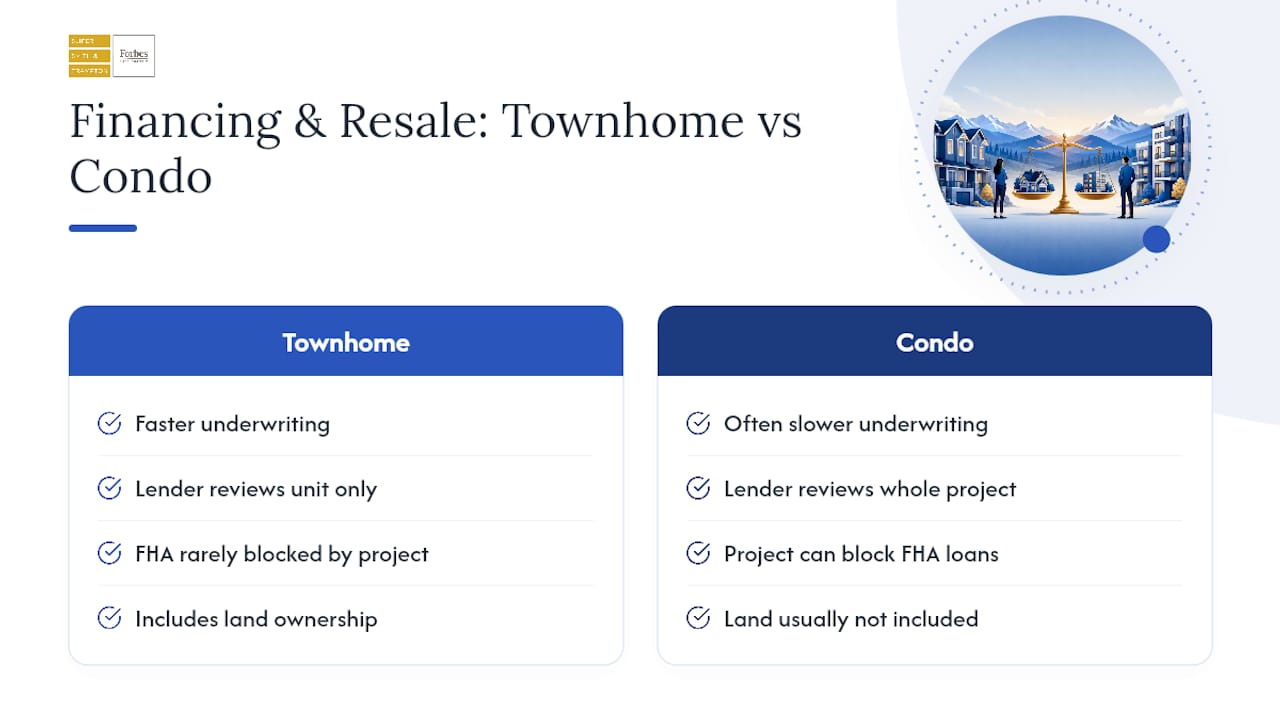
Townhome financing usually resembles standard single-family underwriting, which tends to move faster and with fewer surprises. Condo financing often requires an extra layer: the lender reviews the entire condominium project, not just your unit, checking reserves, insurance coverage, litigation history, and owner-occupancy ratios, according to MortgagePorter's guide to townhome versus condo financing.
That project-level review is where qualified buyers get stuck. A financially weak association can block certain loan programs even when your personal credit and income are solid. If you're considering FHA financing on a condo, check the HUD condo lookup tool early to confirm the project carries FHA approval, since not every complex does.
Land ownership also plays into long-term appreciation. Because a townhome includes the land beneath it, resale comparisons often track more closely with single-family homes in the same area. To avoid financing delays on either type, gather your pre-approval letter, two years of tax returns, recent pay stubs, and (for condos) ask your agent to request the HOA's certification package as soon as you're under contract.
Lifestyle Tradeoffs: Privacy, Noise, and Amenities
Condo living trades some privacy for convenience. Shared walls and floors mean more noise exposure, but you often gain amenities like a pool, gym, or ski locker room, plus the lock-and-leave simplicity that fits a second home or rental property well.
Townhome living usually flips that trade. You get more privacy, your own yard or patio, and fewer shared walls, but you take on more exterior upkeep yourself.
Buyer profiles tend to sort naturally:
- First-time buyers and frequent travelers often prefer condo convenience
- Retirees and buyers who want minimal upkeep also lean condo
- Families needing outdoor space and long-term investors seeking land value often lean townhome
Always check the HOA's pet policy, rental restrictions, and short-term rental rules before assuming your intended use is allowed. These vary widely even within the same town.
Your Decision Checklist Before Making an Offer
Run through these questions in order before you write an offer on either type:
- How much maintenance do you actually want to do? If the answer is "none," lean condo.
- Do you need outdoor space? A townhome yard beats a condo balcony for families and pet owners.
- How sensitive is your financing timeline? Condo project reviews can add weeks; townhome underwriting is usually faster.
- What's your resale timeline? Land ownership in a townhome can support more stable comps.
- How much HOA control can you tolerate? Strict rental or renovation restrictions frustrate some owners more than others.
Request these documents before removing contingencies: the CC&Rs, HOA bylaws, current budget, reserve study, recent meeting minutes, insurance certificate, and any disclosure of pending litigation against the association.
Pro Tip: Thin reserves, unresolved litigation, or vague maintenance clauses in the CC&Rs are all reasons to pause an offer, not push through it. A weak association can cost you more over five years than a slightly higher purchase price ever will.
Buying in Summit County: What's Different Here
Summit County adds its own layer on top of the condo versus townhome decision. Short-term rental rules vary town by town, so a condo that allows nightly rentals in Silverthorne might face different restrictions in Breckenridge or Keystone. Snow load also changes the maintenance math: a townhome owner responsible for their own roof and driveway will pay more for winterization and snow removal here than in a milder climate.
Seasonal demand shapes resale timing too, with ski season and summer both driving separate buyer pools. If you're weighing options, browse Keystone condos, Breckenridge condos, or listings in Frisco and Silverthorne to see how HOA fees and rental rules differ by town before narrowing your search.
Get Local Help Choosing Between a Townhome and a Condo
Reading HOA documents and comparing loan requirements is manageable, but knowing which Summit County HOA has thin reserves or which town just tightened its short-term rental ordinance takes someone on the ground. That's the gap a local real estate expert fills for buyers weighing a condo against a townhome in Keystone, Breckenridge, Frisco, Dillon, or Silverthorne.
Working with with a local agent means someone can pull the HOA's reserve study and meeting minutes for you, explain how a specific town's STR rules apply to the exact listing you're considering, and line up matching properties before you spend a weekend driving between showings. If you're ready to compare specific condo and townhome listings in Summit County, or you just want a second set of eyes on an HOA packet before you sign anything, reach out to Jayden Vermeer Realtor and start the conversation.
Sources
This comparison drew on guidance from Opendoor, Experian, Nolo, and HUD's condo lookup tool, plus local listings in Dillon.
- Pros and cons of buying a condo or townhome — Opendoor
- Condo vs. townhouse — Experian
- Which costs more to own and maintain: condo, townhome, or single-family home? — Nolo
- Townhome vs. Condo: Washington State Buyer Guide — MortgagePorter
- Condo vs townhouse — Better Homes & Gardens
FAQ
Is It Better to Live in a Condo or a Townhouse?
It depends on your priorities: condos suit buyers who want low maintenance and amenities, while townhomes suit buyers who want more privacy, outdoor space, and land ownership.
Which Is Cheaper, a Townhouse or a Condo?
Purchase prices vary by market, but condo HOA fees tend to run higher than townhome HOA fees because condo associations typically cover more exterior maintenance and amenities, per Experian.
What Are the Disadvantages of a Townhouse?
Townhome owners often shoulder more exterior maintenance themselves, and unclear HOA bylaws around shared structures like roofs can lead to disputes and surprise costs, according to Nolo.
What Are the Key Differences Between a Condo and a Townhouse?
The core difference is ownership: condo owners typically own only their interior unit, while townhouse owners usually own the structure and the land beneath it, a distinction confirmed in the NCREC brochure.
Does Jayden Vermeer Realtor Help Compare Condos and Townhomes in Summit County?
Yes. Jayden Vermeer Realtor helps buyers review HOA documents, understand town-specific STR rules, and compare matching condo and townhome listings across Keystone, Breckenridge, Frisco, Dillon, and Silverthorne.